10 Best Peranakan Restaurants in Singapore
Ten Peranakan restaurants in Singapore for Nyonya classics like ayam buah keluak, babi pongteh and chap chye, from heritage shophouses to modern kitchens.
- Edited by
- Amir Wahab
- Published
- Reading time
- 5 min read
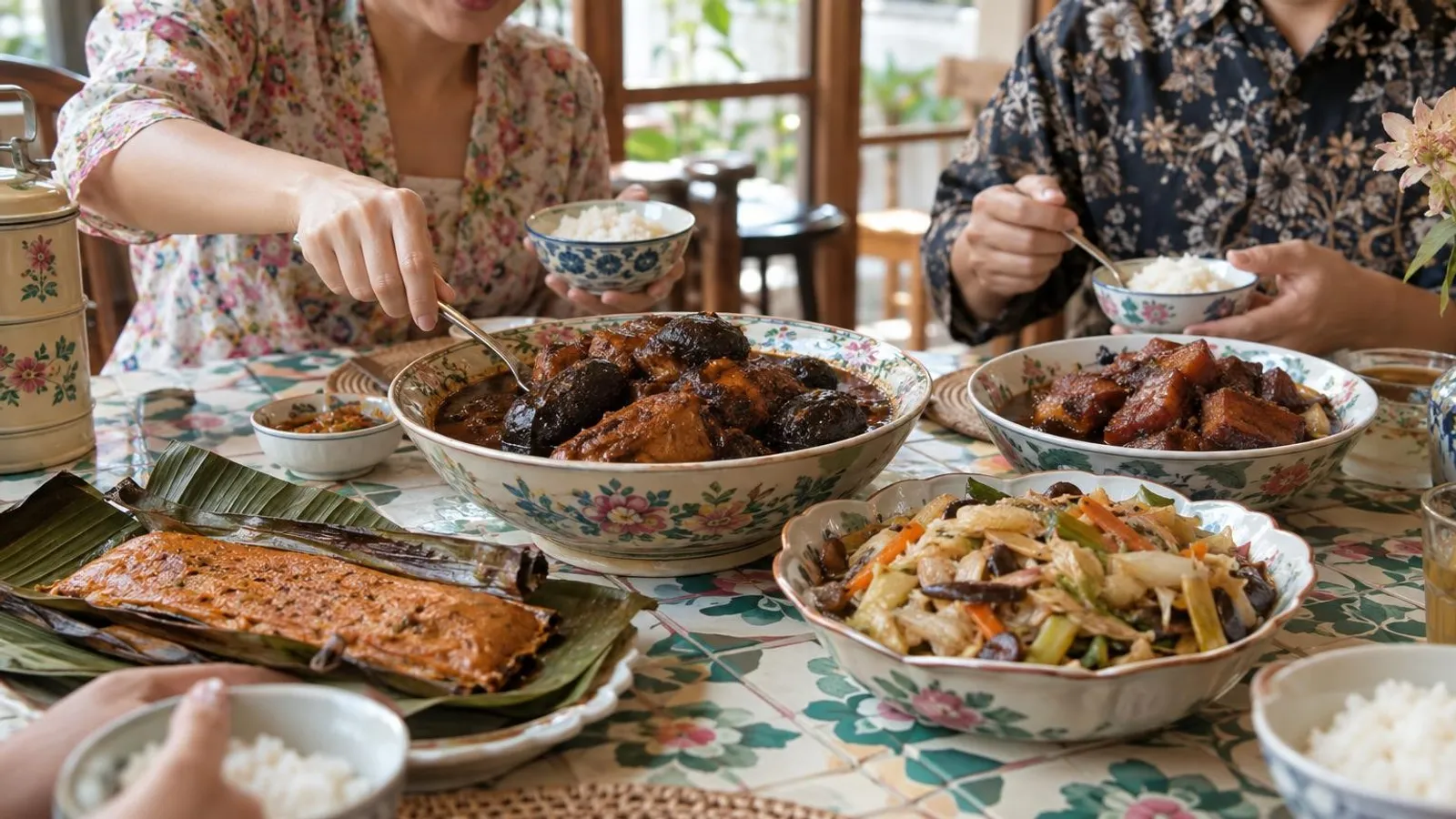 AI image by LocalRank
Peranakan cuisine is one of Singapore's great culinary inheritances, marrying Chinese ingredients with Malay spices in dishes such as ayam buah keluak, babi pongteh and chap chye. This guide gathers ten Peranakan restaurants in Singapore, from decades-old family kitchens to contemporary dining rooms, each checked against its own website or official pages. Use it as a shortlist to explore Nyonya cooking across the island, not a strict ranking.
1. Candlenut
Candlenut, helmed by chef Malcolm Lee, describes its cooking as 'a contemporary yet authentic approach to traditional Straits-Chinese cuisine' and says it lifts often-rich dishes 'with astute twists' while keeping their traditional complexity. Set among the greenery of Dempsey, it sits at the polished, contemporary end of the Peranakan spectrum rather than being a casual family kitchen. Expect refined takes on Nyonya cooking, where labour-intensive ingredients such as the black nut buah keluak get a fine-dining treatment.
Dempsey
Visit website ↗View on map ↗
2. True Blue Cuisine
True Blue Cuisine, run by Baba Benjamin Seck, calls itself 'a living heritage' and promises 'an all-round experience of the rich Peranakan culture,' set in a shophouse beside the Peranakan Museum and dressed with antiques and hand-embroidered kebayas. The kitchen turns out traditional Nyonya home cooking such as ayam buah keluak, and the restaurant notes it serves no pork. It is one of the city's more atmospheric spots for a sit-down Peranakan meal, in the Armenian Street museum precinct.
Armenian Street
Visit website ↗View on map ↗
3. Guan Hoe Soon
Guan Hoe Soon bills itself as 'Serving Authentic Peranakan Cuisine Since 1953,' which would make it one of Singapore's oldest Nyonya restaurants, now run by the third generation of the founding family in Joo Chiat. Its website stresses quality and authenticity, describing an aim to preserve the original taste of Peranakan cooking with fresh ingredients and selected spices. The menu runs through traditional dishes such as ayam and assam fish in a long-standing neighbourhood setting.
4. The Blue Ginger
The Blue Ginger describes Nyonya cooking as a blend of 'traditional Chinese and Malay techniques and ingredients' and sums up its promise as 'hearty meals that bring you closer to the people you love.' Housed in a restored shophouse on Tanjong Pagar Road, it is a long-running favourite for classic Peranakan dishes, from ayam buah keluak to the grilled chicken it is known for, ayam panggang. It offers a comfortable, sit-down setting a short walk from the CBD.
Tanjong Pagar
Visit website ↗View on map ↗
5. Violet Oon Singapore
Violet Oon Singapore, from the veteran food personality of the same name, is built on 'celebrating fine Singaporean flavours' and the 'rich culinary heritage' of the island, with Peranakan cooking at its heart. Its dining rooms plate Nyonya-leaning specialities such as a signature dry laksa alongside broader Singaporean classics, in polished surroundings. Outlets sit at the National Gallery (as National Kitchen by Violet Oon), Dempsey and ION Orchard, spanning grand heritage architecture and mall-side dining.
National Gallery, Dempsey and ION Orchard
Visit website ↗View on map ↗
6. Godmama
Godmama styles itself as a 'Modern Peranakan Kitchen & Bar,' saying its cooking honours 'our Godmama's treasured recipes' with contemporary presentation. Its menu lists Nyonya classics including ayam buah keluak, babi pongteh and chap chye, served in a bright, lively room pitched at a younger crowd. It runs outlets at Funan in the Civic District and at Parkway Parade in the east.
Funan and Parkway Parade
Visit website ↗EmailView on map ↗
7. Chilli Padi Nonya Restaurant
Chilli Padi Nonya Restaurant, tucked into Joo Chiat Place, serves what it calls 'authentic Peranakan cuisine' and is known among regulars for its 'famous sambal belacan' and a spicier hand with chilli. The kitchen names its cabbage roll and curry fish head as clear favourites, rounded out with the wider Nyonya repertoire. It is a casual, family-style neighbourhood restaurant in the Katong-Joo Chiat heartland of Peranakan food.
Joo Chiat
Visit website ↗View on map ↗
8. Baba Chews Bar and Eatery
Baba Chews Bar and Eatery occupies the former Joo Chiat Police Station, which it describes as 'a heritage landmark that has been part of the neighbourhood since 1928,' inside Hotel Indigo Singapore Katong. It calls its food 'All-Day Modern Asian, Local Signatures & Western Classics,' leaning on its Katong surroundings and Peranakan heritage rather than a strictly traditional menu. Look for Peranakan signatures such as babi pongteh and an 18-hour braised beef cheek rendang alongside more contemporary plates.
9. PeraMakan
PeraMakan serves Peranakan home cooking it describes as 'nostalgic comfort food that tastes like home,' and frames its Owen Road dining room as 'laid-back, lush, and homely,' like visiting a Nyonya auntie's kitchen. Having moved on from its long-time Keppel Club premises, it now runs a restaurant near Farrer Park on Owen Road plus a smaller city outlet on Hong Kong Street. It is an unfussy choice for everyday Nyonya dishes rather than a special-occasion setting.
10. Ivins Peranakan Restaurant
Ivins Peranakan Restaurant is a long-running neighbourhood Nyonya restaurant at Binjai Park in Bukit Timah, recently refreshed into a smaller, cosier dining room. It is the kind of unpretentious, home-style spot Singaporeans return to for everyday Peranakan dishes such as ayam buah keluak, sambal-based plates and assam curries. Set among the shops of a quiet residential enclave, it trades on consistency rather than trend.
Binjai Park
View on map ↗
How to choose
- Decide between traditional and modern first. Some kitchens stick close to old family recipes and heartland home cooking, while others give Peranakan flavours a contemporary, restaurant-style spin; knowing which experience you want narrows the field quickly.
- Look for the labour-intensive signatures. Dishes like ayam buah keluak, chicken stewed with the pungent black keluak nut, and babi pongteh take long preparation, so a kitchen that does them well is a good sign of a serious Peranakan menu.
- Match the setting to the occasion. Peranakan spots range from casual shophouses and neighbourhood restaurants to polished dining rooms in heritage buildings and malls, so pick the room that suits an everyday family meal or a special night out.
- Check dietary needs in advance. Peranakan cooking traditionally uses pork and shrimp paste (belacan), but some restaurants serve no pork or offer vegetarian options, so confirm the menu beforehand if that matters to your table.
- Order to share and pace the spice. Nyonya meals are built around communal dishes with rice, from assam curries to sambal-based plates, and heat levels vary between kitchens, so ask about spiciness and order a spread rather than a single main.
. No changes recorded since.
Founder and Editor
Amir Wahab is the founder and editor of LocalRank, an independent Singapore rankings and local guides publication.
Read next
10 Best Biryani Places in Singapore (2026)
Find the best biryani in Singapore: ten dum, bamboo, claypot and heritage biryani places across Little India, Kampong Glam and the heartlands.
By Amir Wahab7 min read
9 Best Lebanese Restaurants in Singapore (2026)
Looking for the best Lebanese restaurants in Singapore? Nine open picks for mezze, charcoal grills and sharing platters, from Kampong Glam to the river.
By Amir Wahab6 min read
11 Best Pasta Restaurants in Singapore (2026)
Discover 11 of the best pasta restaurants in Singapore, from handmade pasta bars to casual mall favourites, with how to choose and what to check first.
By Amir Wahab8 min read
9 Best Meal Prep and Healthy Meal Delivery Services in Singapore (2026)
Compare 9 meal prep and healthy meal delivery services in Singapore, from weekly plans to macro-counted and halal options, with how to choose between them.
By Amir Wahab7 min read