10 Best Mee Rebus in Singapore
Ten spots for the best mee rebus in Singapore, from Adam Road and Haig Road to Ang Mo Kio, Bedok and Changi Village - thick, sweet-savoury gravy and egg.
- Edited by
- Amir Wahab
- Published
- Reading time
- 5 min read
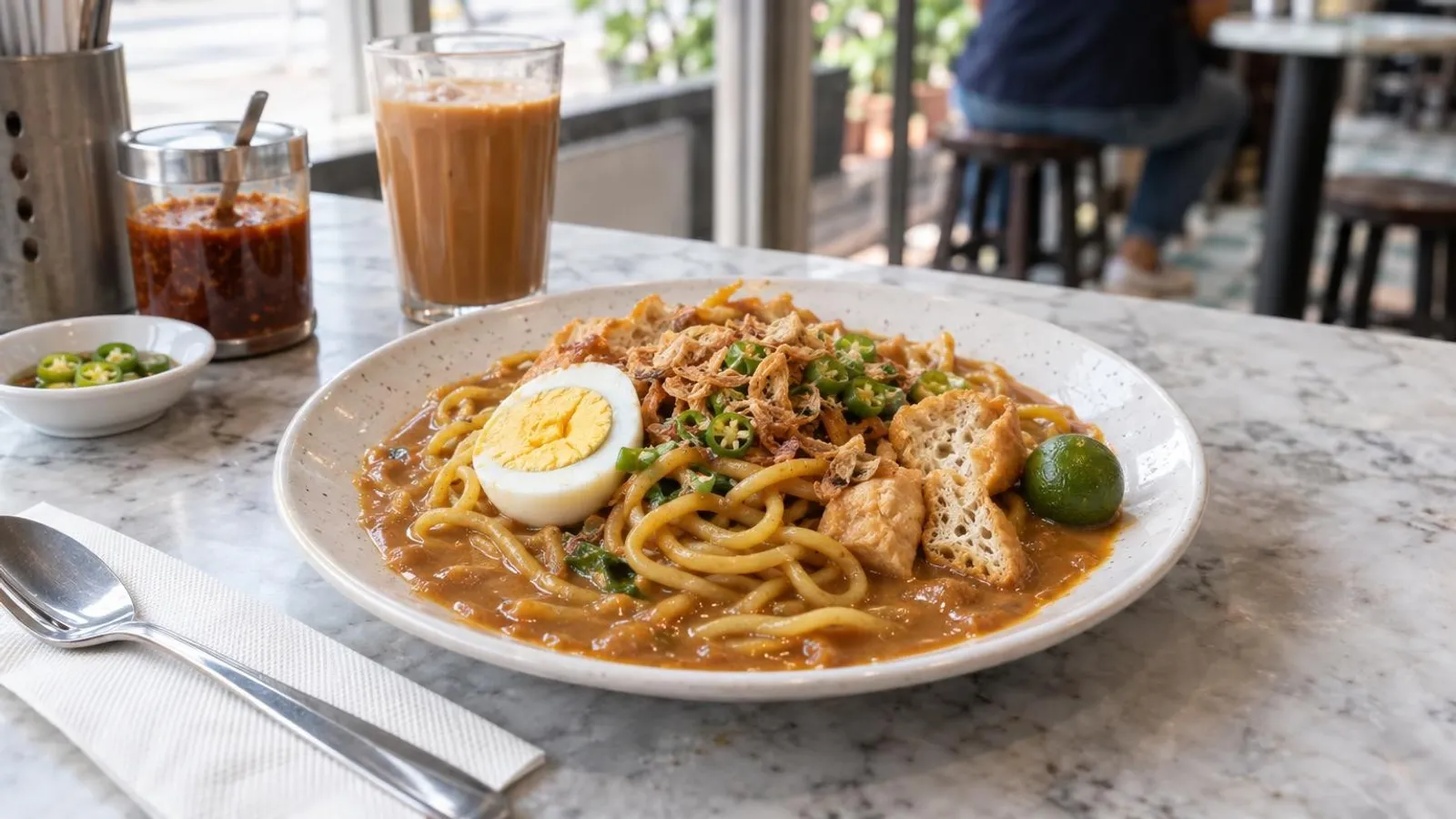 AI image by LocalRank
Few hawker dishes are as comforting as a good bowl of mee rebus: yellow noodles under a thick, sweet-and-savoury gravy thickened with sweet potato, crowned with a boiled egg, tau pok, green chilli and a squeeze of lime. This guide rounds up ten places for mee rebus in Singapore, most of them long-running hawker stalls, each checked for current, independently documented operation. Treat it as a shortlist to explore rather than a strict ranking.
1. Selamat Datang Warong Pak Sapari
This long-running Adam Road Food Centre stall is a mee soto and mee rebus specialist that the family says has been run across several generations. Its mee rebus arrives as yellow noodles under a thick, sweet-and-savoury gravy built from a house-made rempah, finished the traditional way with tau kwa, a hard-boiled egg, green chilli and a squeeze of lime. The stall also sells its own mee rebus and soto paste for cooking the dish at home.
Adam Road
View on map ↗
2. Rahim Muslim Food
At Chong Boon Market & Food Centre in Ang Mo Kio, Rahim Muslim Food is known for a 'power' mee rebus that spoons satay peanut gravy over the usual sweet-savoury potato-based gravy. Expect the standard build of yellow noodles, hard-boiled egg, tau pok, bean sprouts and green chilli, with the extra satay sauce and chopped chicken as its signature. The stall says it has served mee rebus and satay for more than 60 years, now under a later generation of the family.
Ang Mo Kio
View on map ↗
3. Yunos N Family
Yunos N Family, at Ang Mo Kio Central Market & Food Centre, is a mee rebus and mee soto specialist the family says dates back to 1965. Beyond the classic bowl of yellow noodles in a thick, sweet-savoury gravy with egg, tau pok, green chilli and lime, the stall lists several mee rebus variations of its own, including versions topped with a satay-style gravy and with ribs. It is one of the more elaborate mee rebus menus among the island's hawker stalls.
Ang Mo Kio
View on map ↗
4. Afandi Hawa & Family
Afandi Hawa & Family serves its mee rebus from Haig Road Market & Food Centre, a hawker centre long associated with the dish. The stall says its recipe dates to 1967, when the family first cooked near the old Paya Lebar Airport, and it describes a gravy enriched with ingredients such as prawn, flower crab and mutton. The bowl comes together in the traditional way, with yellow noodles, a hard-boiled egg, tau pok, green chilli and a wedge of lime.
Haig Road
View on map ↗
5. Hj Waliti Hj Mazuki
Also at Haig Road Market & Food Centre, Hj Waliti Hj Mazuki is a neighbouring mee rebus stall with its own following. Its point of difference is a gravy the stall cooks with pieces of mutton, ladled over yellow noodles and finished with the customary hard-boiled egg, tau pok, bean sprouts, green chilli and lime. It is a straightforward, old-school bowl in one of Singapore's best-known mee rebus enclaves.
Haig Road
View on map ↗
6. Inspirasi
Inspirasi, at Bedok Interchange Hawker Centre, is a family-run Malay stall the owners say has operated since 1970. Its mee rebus pairs silky yellow noodles with a thick, sweet-savoury gravy, topped with a hard-boiled egg, fresh green chilli, spring onion and fried shallots. Soto ayam and mee soto round out a small, focused menu.
Bedok
View on map ↗
7. Warong Hj Sukarjo
Warong Hj Sukarjo is a small Malay stall at the Blk 58 New Upper Changi Road market in Bedok, run by two sisters and, by its own account, a neighbourhood fixture for decades. Its mee rebus is built on a nutty, creamy gravy balanced between sweet and savoury, served over yellow noodles with cubed tofu, fried shallots and spring onion. The stall keeps limited hours, typically opening only from Friday to Sunday, so it is worth checking before making the trip.
Bedok
View on map ↗
8. Suhaime's
Suhaime's, at Geylang Bahru Market & Food Centre, is a mee rebus stall the owner says works from a recipe traced back to a street stall in Geylang Lorong 1. The bowl is classic mee rebus - yellow noodles in a thick, sweet-savoury gravy with a hard-boiled egg, tau pok, green chilli and lime - and it opens early, with regulars queuing from the start as it can sell out. Arrive early if you want to be sure of a bowl.
Geylang Bahru
View on map ↗
9. Hassan Stall
Tucked inside Changi Village Hawker Centre, Hassan Stall is an old-school Malay stall the family says began in 1959 from a kampung house before moving to Changi Village. Its mee rebus is known for a thick, robust gravy dotted with pieces of fatty beef, an unusual touch, over yellow noodles finished with egg, bean sprouts, green chilli, Chinese celery and shallots. The same kitchen also turns out laksa and mee siam.
Changi Village
View on map ↗
10. Yusof and Arni's Cafe
Yusof and Arni's is a homely Malay cafe in Far East Plaza, just off Orchard Road, offering a sit-down alternative to the hawker centre for mee rebus in town. Its version comes as a generous bowl of yellow noodles in a thick, flavourful gravy with tau kwa and chicken, alongside a wider menu of home-style Malay dishes. It is listed as halal-certified.
Orchard
View on map ↗
How to choose
- Judge the gravy first. A good mee rebus gravy should be thick enough to coat the noodles, with a balance of sweet, savoury and gentle spice from the taucheo and rempah, so taste it before adding more chilli.
- Check the noodles and toppings. Fresh yellow noodles should be springy rather than mushy, and a proper bowl comes with tau pok or tau kwa, bean sprouts, a hard-boiled egg, green chilli and fried shallots; squeeze the lime in just before eating.
- Look for stalls that cook their gravy from scratch. Many long-running Malay stalls guard a family rempah, and some add a signature such as satay peanut sauce or pieces of beef or mutton, so it pays to try a few different styles.
- Go early for the popular stalls. The best-known bowls draw queues and several stalls sell out before closing, so plan an early visit and check opening days, as some open only on weekends or take a mid-week rest.
- Confirm halal status if it matters to you. Most mee rebus stalls are Malay-Muslim run, but certification is granted per stall and can change, so check the current certificate on display or ask at the counter.
. No changes recorded since.
Founder and Editor
Amir Wahab is the founder and editor of LocalRank, an independent Singapore rankings and local guides publication.
Read next
10 Best Biryani Places in Singapore (2026)
Find the best biryani in Singapore: ten dum, bamboo, claypot and heritage biryani places across Little India, Kampong Glam and the heartlands.
By Amir Wahab7 min read
9 Best Lebanese Restaurants in Singapore (2026)
Looking for the best Lebanese restaurants in Singapore? Nine open picks for mezze, charcoal grills and sharing platters, from Kampong Glam to the river.
By Amir Wahab6 min read
11 Best Pasta Restaurants in Singapore (2026)
Discover 11 of the best pasta restaurants in Singapore, from handmade pasta bars to casual mall favourites, with how to choose and what to check first.
By Amir Wahab8 min read

9 Best Meal Prep and Healthy Meal Delivery Services in Singapore (2026)
Compare 9 meal prep and healthy meal delivery services in Singapore, from weekly plans to macro-counted and halal options, with how to choose between them.
By Amir Wahab7 min read