10 Best Ban Mian in Singapore
From handmade anchovy-soup classics to KL-style dry chilli bowls and pumpkin mee hoon kueh, here are 10 of the best ban mian in Singapore to slurp.
- Edited by
- Amir Wahab
- Published
- Reading time
- 5 min read
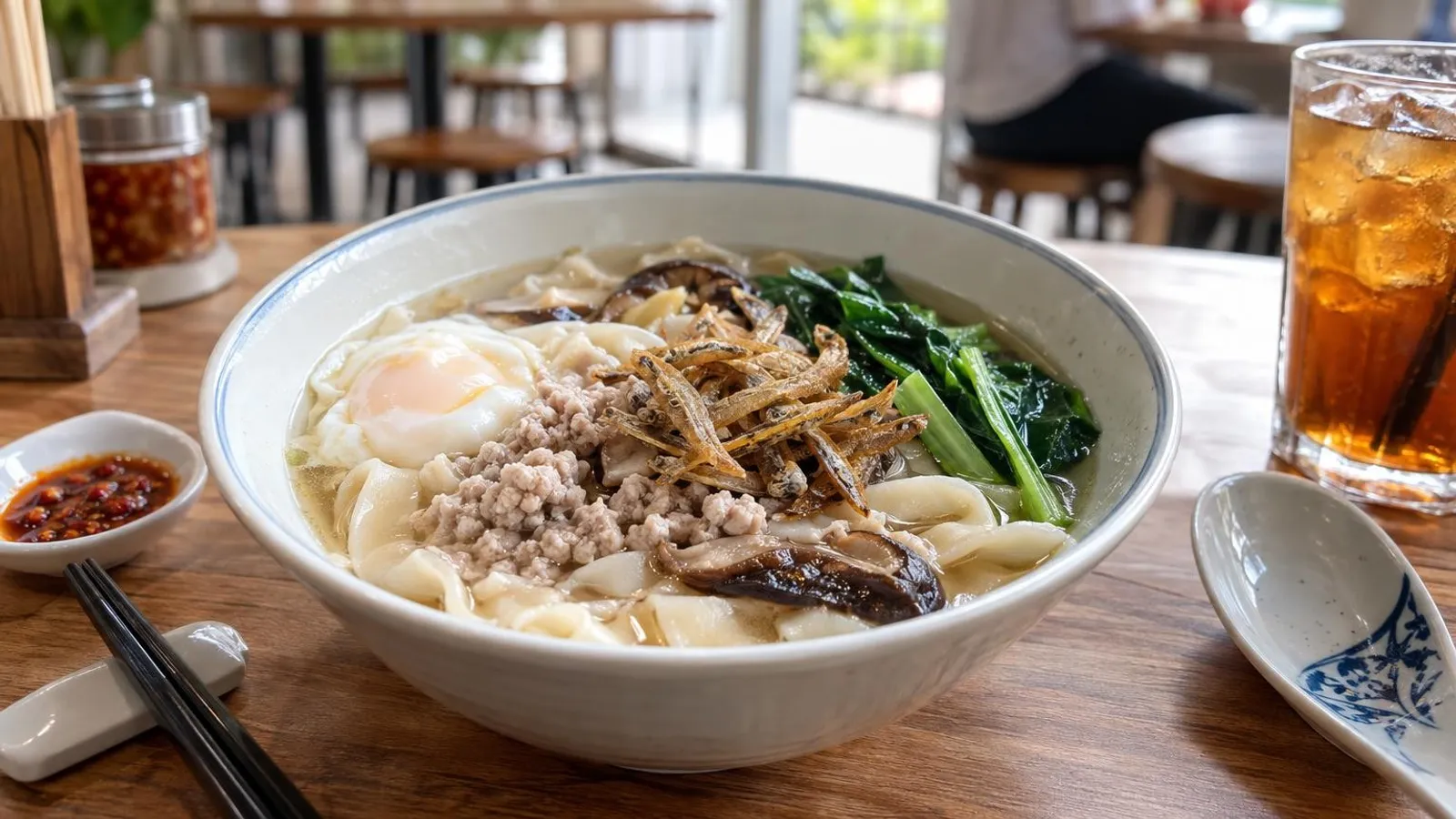 AI image by LocalRank
Few hawker comforts beat a bowl of ban mian in Singapore: springy handmade flat noodles or hand-torn mee hoon kueh in a savoury ikan bilis broth, topped with minced pork, a runny egg, mushroom and crisp anchovies, or tossed dry with chilli. This guide rounds up ten real, currently-operating stalls, each checked against its own listing or recent coverage. Treat it as a shortlist to explore by area and style, not a strict ranking.
1. L32 Handmade Noodles
L32 Handmade Noodles is a long-running Geylang stall that has drawn queues for its handmade ban mian for well over a decade, with the dough rolled and cut on the spot. It serves both dry and soup versions across noodle shapes from ban mian to u-mian, bee hoon and mee sua, ladled with an anchovy broth the stall says is simmered for hours without MSG and finished with minced pork, egg and fried ikan bilis. A meatball bowl is one of its signatures, and it has since added branches beyond the original Lorong 32 shop.
Geylang
View on map ↗
2. China Whampoa Home Made Noodle
China Whampoa Home Made Noodle is a Whampoa Food Centre institution that traces its start to 1989 and mills its noodles in small batches at the stall. Its broth is built on dried ikan bilis and soybeans rather than pork bones, and pairs with a wide range of toppings from minced pork and egg to seafood, ordered dry or in soup. It is known for long queues and a house-made chilli that regulars add to the dry bowl.
Whampoa
View on map ↗
3. Top 1 Home Made Noodle
Top 1 Home Made Noodle sits inside Beauty World Centre in Bukit Timah and builds its reputation on fully customisable bowls, letting diners pick from several handmade noodle shapes and a choice of soup or dry sauces. Beyond the classic anchovy broth with minced pork, egg and ikan bilis, it offers a tom yum base for those who want a spicier, tangier bowl. The stall makes its noodles by hand and regularly draws weekday queues.
Beauty World
View on map ↗
4. Poon Nah City Home Made Noodle
Poon Nah City Home Made Noodle has been handmaking noodles at City Plaza near Paya Lebar for around two decades. The menu spans mee hoon kueh, ban mian, u-mian, bee hoon and mee sua in dry or soup styles, and it stands out for premium add-ons such as abalone, scallop, prawn, fish maw and sliced fish alongside the usual minced pork, egg and anchovy broth. It remains a steady favourite for a comforting, build-your-own bowl.
Paya Lebar
View on map ↗
5. Sky JB Mian Fen Kueh
Sky JB Mian Fen Kueh, run by a Malaysian couple from Johor Bahru, hand-makes its mee hoon kueh from scratch at Old Airport Road Food Centre. Alongside the original dough flakes it offers pumpkin and spinach versions, served in a classic anchovy soup with minced pork, ikan bilis and fishballs, or in tom yum and curry broths. The coloured, handmade dough is its calling card.
Old Airport Road
View on map ↗
6. Qiu Lian Ban Mee
Qiu Lian Ban Mee is one of Singapore's most widespread handmade-noodle brands, with more than twenty stalls across the island that it says grew from a single ban mee stall started in 1988. It is best known for its dry ban mee, tossed in a savoury dark sauce and topped with minced pork, fried ikan bilis and a poached egg, with soup versions and a spicier you mee also on the menu. Being islandwide makes it one of the easiest bowls of ban mian to find near home or work.
7. King of Ban Mian
King of Ban Mian, tucked into a Hougang coffeeshop, makes its noodles fresh on site, hand-kneading and pressing the dough before it goes into the pot. It offers both the springy handmade ban mian and hand-torn mee hoon kueh in dry or soup form, served with minced pork, egg and an anchovy broth the stall cooks daily. Despite an out-of-the-way spot, it has built a steady following.
Hougang
View on map ↗
8. Prince Noodles
Prince Noodles specialises in KL-style ban mian, freshly pulled and cut to order, with its flagship at ARC 380 in the Jalan Besar area and several other outlets. Ban mian, u-mian and mee hoon kueh come dry or in soup, and instead of the usual dried-chilli topping the stall serves a garlicky chilli sauce diners can add to taste. The dry bowl, tossed in a sweet-savoury sauce with minced pork, is its signature.
Jalan Besar
View on map ↗
9. Bossi Ban Mian
Bossi Ban Mian is a Malaysian Hakka-style stall at Serangoon Garden Market, run by a mother-and-son team who make their own noodles, chilli and preserved vegetables. What sets it apart is the chye poh (preserved radish) stirred into the anchovy soup and a house green-chilli puree with a sour, spicy kick, served over ban mian or mee hoon kueh with minced pork and egg. It leans more savoury and tangy than the typical bowl.
Serangoon Gardens
View on map ↗
10. Legacy Ban Mian
Legacy Ban Mian was started by two younger-generation cousins who, by their account, carry on a family recipe from the 1980s, still tearing their mee hoon kueh by hand without a machine. From its Upper Boon Keng coffeeshop, with a second stall at Hong Lim, it serves ban mian and mee hoon kueh in soup or dry form in a comforting anchovy broth with minced pork and egg, plus a zesty house chilli. The hand-torn dough is its point of pride.
Boon Keng
View on map ↗
How to choose
- Decide dry or soup first. Soup bowls come in a savoury ikan bilis (anchovy) broth, while dry versions are tossed in chilli or a dark sauce with the soup served on the side; many stalls offer both, so you can match your mood.
- Pick your noodle shape. Ban mian means flat, hand-cut noodles, mee hoon kueh is irregular hand-torn dough flakes, and u-mian is thinner and rounder; the more handmade and made-to-order, the chewier the texture tends to be.
- Check the chilli. It varies a lot between stalls, from KL-style garlicky sauce to Hakka green-chilli puree or a sambal-style paste, and often defines a stall's character, especially for the dry bowl. Some also offer a mala or tom yum option if you want more heat.
- Look at the toppings and broth. Standard bowls include minced pork, fried ikan bilis, an egg, mushroom and leafy greens; some stalls upgrade to seafood such as prawn, sliced fish or clams, which changes both the price and the soup.
- Time your visit and note the location. Popular handmade-noodle stalls cook to order and can have long queues at lunch, and many hawker stalls close one day a week or by mid-afternoon, so check opening days and go off-peak.
. No changes recorded since.
Founder and Editor
Amir Wahab is the founder and editor of LocalRank, an independent Singapore rankings and local guides publication.
Read next
10 Best Biryani Places in Singapore (2026)
Find the best biryani in Singapore: ten dum, bamboo, claypot and heritage biryani places across Little India, Kampong Glam and the heartlands.
By Amir Wahab7 min read
9 Best Lebanese Restaurants in Singapore (2026)
Looking for the best Lebanese restaurants in Singapore? Nine open picks for mezze, charcoal grills and sharing platters, from Kampong Glam to the river.
By Amir Wahab6 min read
11 Best Pasta Restaurants in Singapore (2026)
Discover 11 of the best pasta restaurants in Singapore, from handmade pasta bars to casual mall favourites, with how to choose and what to check first.
By Amir Wahab8 min read
9 Best Meal Prep and Healthy Meal Delivery Services in Singapore (2026)
Compare 9 meal prep and healthy meal delivery services in Singapore, from weekly plans to macro-counted and halal options, with how to choose between them.
By Amir Wahab7 min read