14 Best Bak Kut Teh in Singapore
Fourteen of the best bak kut teh in Singapore, from Teochew peppery pork rib soup to Hokkien herbal claypot styles, each checked against its own site or listing.
- Edited by
- Amir Wahab
- Published
- Reading time
- 7 min read
 AI image by LocalRank
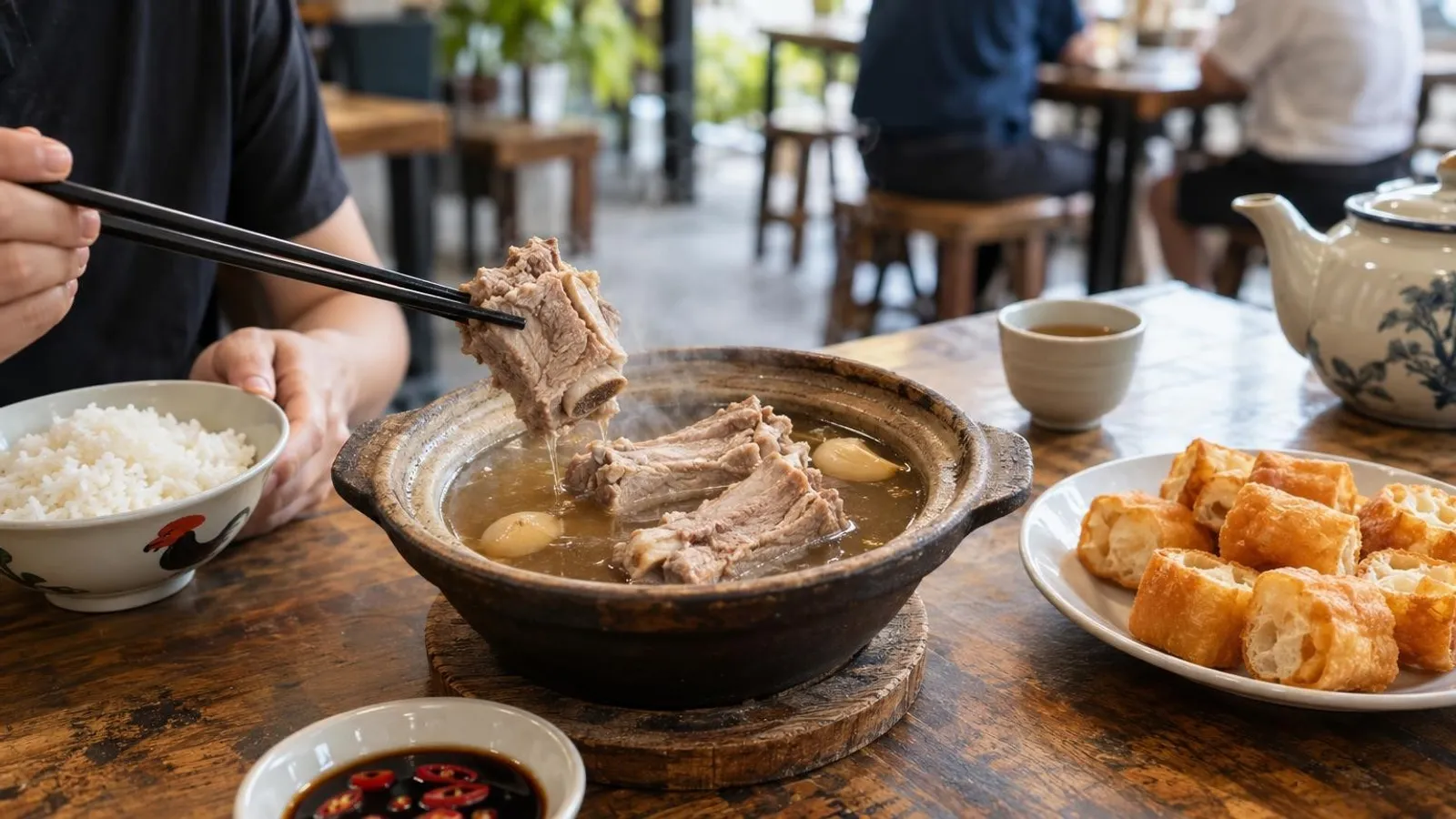
Comfort in a bowl, bak kut teh in Singapore splits broadly into two camps: the clear, pepper-and-garlic Teochew pork rib soup and the darker, herb-laden Hokkien and claypot styles. This guide gathers fourteen real, currently-operating spots, from heritage names to neighbourhood stalls, each verified against its own website or official listing. Use it as a shortlist to match your taste, whether you lean peppery or herbal, rather than a strict ranking.
1. Song Fa Bak Kut Teh
Song Fa is one of Singapore's best-known Teochew-style bak kut teh names, serving a hot, peppery pork rib soup that the brand traces back to a Johor Road pushcart in 1969. Diners get tender, fall-off-the-bone ribs in a clear, garlicky broth, usually paired with you tiao (fried dough fritters) and Chinese tea. It has grown into a chain with multiple outlets across the island, from its New Bridge Road flagship to shopping-mall branches.
2. Ng Ah Sio Bak Kut Teh
Ng Ah Sio is a heritage Teochew bak kut teh specialist whose flagship sits on Rangoon Road, near Farrer Park. Its own site describes a distinctly peppery pork rib soup dating back to 1955, traditionally eaten with you tiao and a strong pot of Chinese tea. The brand has been run under the Jumbo group since 2010 and remains one of the city's best-known peppery bak kut teh names.
Rangoon Road
Visit website ↗View on map ↗
3. Founder Bak Kut Teh
Founder Bak Kut Teh, known in Mandarin as Founder Rou Gu Cha, has served its pork rib soup on Balestier Road for over 40 years by its own account. The restaurant describes a specially formulated broth of herbs and spices simmered with meaty pork ribs, the dish it is best known for. Its website points to further outlets beyond the Balestier original.
Balestier
Visit website ↗View on map ↗
4. Outram Park Ya Hua Rou Gu Cha
Outram Park Ya Hua is a long-running peppery bak kut teh institution whose main outlet sits inside the PSA Tanjong Pagar Complex on Keppel Road, a popular late-night stop. Its clear, pepper-forward pork rib broth is the draw, and the restaurant lists a second outlet on Havelock Road on its own site. Both open early in the morning and run into the evening, and are closed on Mondays.
Keppel Road and Havelock
Visit website ↗View on map ↗
5. Tuan Yuan Pork Ribs Soup
Tuan Yuan serves what it calls authentic Teochew bak kut teh from its restaurant on Kim Tian Road in the Tiong Bahru area. The peppery pork rib soup is built on a garlic, pepper and pork-bone base, and the menu extends to pork organ soups, steamed fish and vegetable sides. It is a comfortable sit-down spot rather than a hawker stall, with pepper levels you can adjust to taste.
Tiong Bahru
Visit website ↗View on map ↗
6. Old Street Bak Kut Teh
Old Street takes the herbal, darker style of bak kut teh as its house specialty, describing itself as a specialist in traditional herbal pork ribs soup rather than the clear peppery Teochew version. Alongside the herbal soup, its menu features a signature dry bak kut teh and freshly made you tiao. It is one of Singapore's largest bak kut teh chains, with outlets in malls and neighbourhoods across the island.
7. Sin Heng Claypot Bak Koot Teh
Sin Heng is an old-school eatery on Joo Chiat Road that serves its bak kut teh in a claypot, offering both the peppery Teochew style and a darker, sweeter herbal Hokkien version cooked with dark soy sauce. The claypot pork rib soup comes loaded with ingredients such as lettuce, mushrooms and beancurd skin, and the kitchen also turns out zi char dishes and sesame oil chicken. It is one of the few places in the city to do both bak kut teh styles side by side.
Joo Chiat
View on map ↗
8. Leon Kee Claypot Pork Rib Soup
Leon Kee is a hawker stall at Alexandra Village Food Centre serving Hokkien-style bak kut teh in a claypot, with a dark, herbal broth built on dang gui and other Chinese herbs simmered for hours. Beyond the herbal pork rib soup, it offers dishes such as pig's tail soup, sesame oil chicken and braised items. The claypot keeps the soup hot and concentrated, a clear contrast to the light, peppery Teochew style.
Alexandra Village
View on map ↗
9. Hong Ji Claypot Herbal Bak Kut Teh
Hong Ji specialises in herbal claypot bak kut teh, the JB and Klang-influenced style in which pork ribs are simmered in a dark broth of Chinese herbs rather than the peppery Teochew soup. The kitchen describes using more than ten herbs, including dang gui and dang shen, cooked for hours into a fragrant, gently herbal broth. It runs neighbourhood outlets, including one at Ang Mo Kio and another in Jurong West.
Ang Mo Kio
View on map ↗
10. Rong Cheng Bak Kut Teh
Rong Cheng is a long-running Teochew bak kut teh specialist rooted in the Sin Ming area, now operating from Midview City on Sin Ming Lane. It is often credited as the stall that popularised loin ribs, sometimes called dragon ribs, served in a clear, peppery pork rib broth. Traditionalists come for the pared-back, old-school experience, eaten with rice and a pot of Chinese tea.
Sin Ming
View on map ↗
11. Joo Siah Bak Koot Teh
Joo Siah Bak Koot Teh is a Teochew-style pork rib soup stall that has run from a coffeeshop unit in Jurong East's Kai Xiang Food Centre for more than three decades. The kitchen keeps to a peppery, garlic-forward broth in the classic hawker mould, with soft, well-cooked ribs typically eaten alongside a chilli-and-soy dip. It picked up a MICHELIN Bib Gourmand recognition in the 2026 Singapore guide, one of several hawker-style bak kut teh stalls to make that list, and remains a fixture for residents in the west of the island rather than a city-centre destination.
Jurong East
Visit website ↗View on map ↗
12. Hokkien Street Bak Kut Teh
Hokkien Street Bak Kut Teh has served the less common Hokkien-style version of the dish from Hong Lim Market & Food Centre in Chinatown since the 1960s, according to food writers who have covered the stall for years. Rather than the clear, peppery Teochew broth, the kitchen builds a dark, faintly sweet soup from dark soy sauce and a mix of Chinese herbs, including angelica root, cinnamon and liquorice root, simmered slowly with the pork ribs. Alongside the signature soup, the menu runs to pig's trotters, pork offal soup, meatballs and steamed fish. It holds a MICHELIN Guide listing, and is regularly named one of the few dedicated Hokkien-herbal specialists left in Singapore's hawker scene.
Chinatown
View on map ↗
13. Balestier Bak Kut Teh
Balestier Bak Kut Teh runs a round-the-clock coffeeshop operation on Balestier Road, making it one of the few places in Singapore to serve the dish at any hour, including well past midnight. The family-run kitchen sticks to a Teochew-style peppery broth, distinguished by the use of whole bamboo sugarcane in the pot, a point of difference from most other peppery stalls. Beyond the standard pork rib soup, the menu covers braised pork belly, pig's trotters and a handful of spicier, modern variations on the classic bowl. It has built a reputation over decades as a reliable late-night and supper stop for the area, alongside Balestier's better-known daytime bak kut teh names.
Balestier
Visit website ↗View on map ↗
14. Lau Ah Tee Bak Kut Teh
Lau Ah Tee Bak Kut Teh has run from a coffeeshop unit in Whampoa West since 1964, and is regularly cited by food writers as one of the pioneers of Singapore's peppery Teochew style. Its broth is kept deliberately plain, built from little more than water, Sarawak peppercorns and garlic simmered with pork ribs, without the added herbs some other stalls use. The stall is also credited with popularising bak kut teh as a supper dish, having originally sold it at night to avoid competing directly with its founder's former employer. Beyond the soup, the kitchen turns out Teochew standards such as steamed fish and squid, and it remains a heartland fixture with a loyal, long-queuing following.
Whampoa
Visit website ↗View on map ↗
How to choose
- Start by choosing your style. Teochew shops serve a clear, pepper-and-garlic broth that is light and sharp, while Hokkien, Klang and claypot versions are darker, sweeter and heavier on Chinese herbs, so decide which camp your table prefers before anything else.
- Check what cut of pork is on offer. Some places specialise in prime, meaty loin ribs (often called dragon ribs or long gu), others in smaller spare ribs or offal such as pig's organ soups, and tenderness and price vary with the cut, so ask what is fresh that day.
- Look at the soup refills and sides. Many peppery shops top up the broth for free, which stretches the meal, and the sides matter too: you tiao for dipping, salted vegetables, braised peanuts, tau pok and rice or plain porridge round out a proper bak kut teh spread.
- Go early for the freshest pot. Bak kut teh is a breakfast and lunch dish for many Singaporeans, popular stalls can sell out of certain cuts by mid-afternoon, and a few heritage shops close on fixed rest days, so check opening hours before making the trip.
- Match the setting to your plans. Heritage sit-down restaurants and chains are easy for groups and often stay open late, while hawker-stall specialists in food centres are cheaper and more casual but may involve a queue at peak hours.
. No changes recorded since.
Founder and Editor
Amir Wahab is the founder and editor of LocalRank, an independent Singapore rankings and local guides publication.
Read next
10 Best Biryani Places in Singapore (2026)
Find the best biryani in Singapore: ten dum, bamboo, claypot and heritage biryani places across Little India, Kampong Glam and the heartlands.
By Amir Wahab7 min read
9 Best Lebanese Restaurants in Singapore (2026)
Looking for the best Lebanese restaurants in Singapore? Nine open picks for mezze, charcoal grills and sharing platters, from Kampong Glam to the river.
By Amir Wahab6 min read
11 Best Pasta Restaurants in Singapore (2026)
Discover 11 of the best pasta restaurants in Singapore, from handmade pasta bars to casual mall favourites, with how to choose and what to check first.
By Amir Wahab8 min read
9 Best Meal Prep and Healthy Meal Delivery Services in Singapore (2026)
Compare 9 meal prep and healthy meal delivery services in Singapore, from weekly plans to macro-counted and halal options, with how to choose between them.
By Amir Wahab7 min read