11 Best Bak Kwa in Singapore (2026)
Discover eleven of the best bak kwa shops in Singapore, from heritage charcoal-grilled institutions to innovative makers of sliced, minced and gourmet pork.
- Edited by
- Amir Wahab
- Published
- Reading time
- 6 min read
 AI image by LocalRank
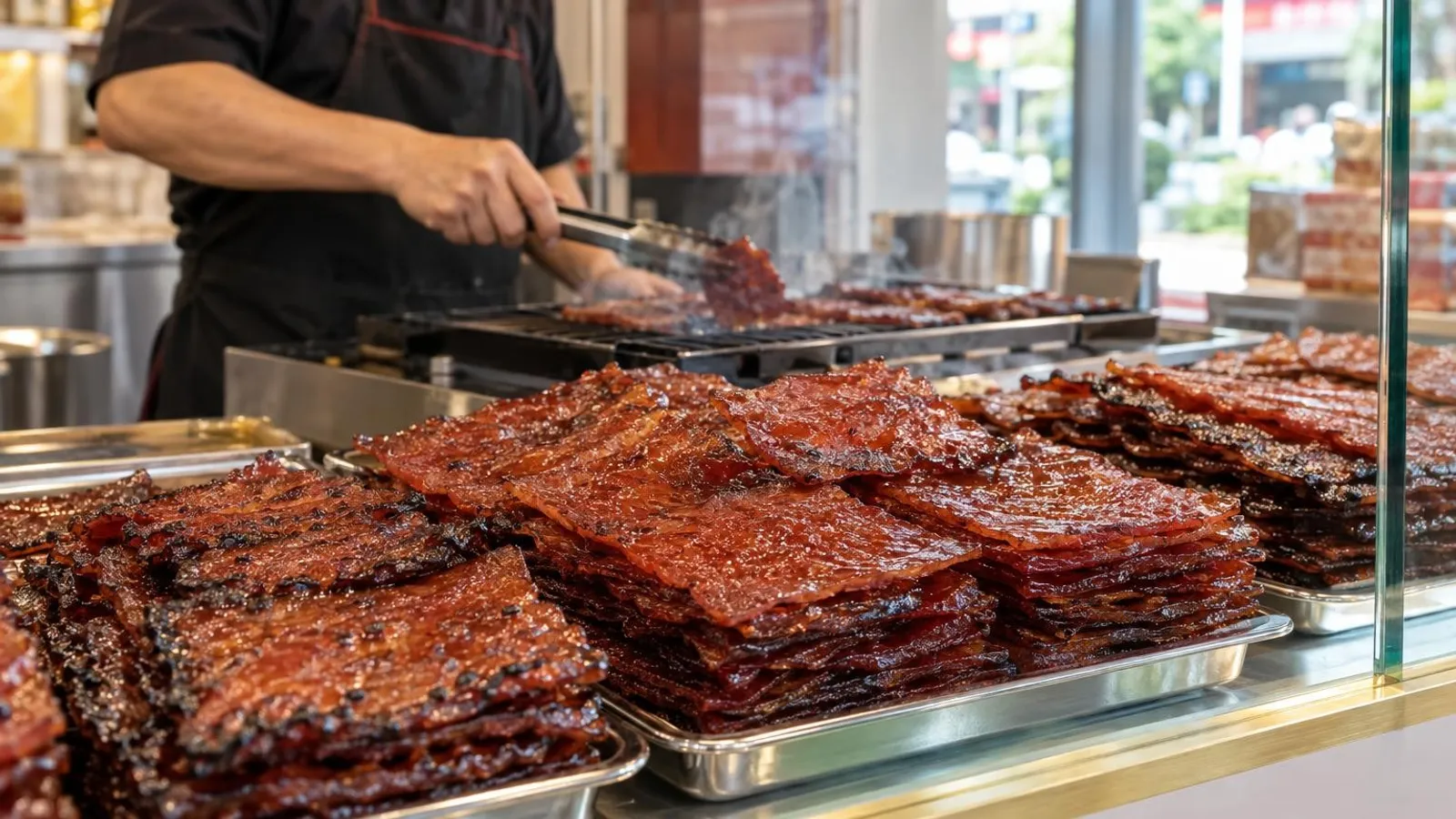
Bak kwa, Singapore's beloved barbecued pork jerky, is grilled year-round, though demand peaks around Chinese New Year. This guide gathers eleven established Singapore bak kwa makers, each checked against its own website or listing, spanning century-old charcoal institutions, family shophouses and inventive modern brands. Use it as a shortlist of styles, from sliced and minced pork to chilli, chicken and gourmet cuts, rather than a strict ranking.
1. Bee Cheng Hiang
Bee Cheng Hiang traces its roots to 1933, when founder Teo Swee Ee is said to have sold barbecued meat from a shoulder pole and charcoal grill before opening a store. Today it is one of Singapore's most widespread bak kwa brands, with more than 40 local outlets by its own count. The brand offers slices cut slightly thicker for a firmer, leaner chew, alongside minced versions and its Gourmet Bakkwa line, including a chilli variety. It is a reliable, easy-to-find starting point for classic barbecued pork.
2. Lim Chee Guan
Lim Chee Guan has made bak kwa since 1938, when founder Lim Kay Eng set up in Chinatown, and it remains a family-run institution now led by later generations. Its New Bridge Road flagship still runs a charcoal grilling station, and the brand says marinating, spreading and grilling the slices over charcoal are done by hand. Expect tender, deep-maroon sliced pork alongside a chilli option. Beyond Chinatown it lists outlets at People's Park Complex and ION Orchard, and its queues are famously long at festive peaks.
Chinatown
Visit website ↗View on map ↗
3. Fragrance
Fragrance, or Fragrance Bak Kwa, began when Madam Ong opened her first stall in 1969, the name a nod to the aroma of barbecued meat. It has grown into one of the island's larger chains, with dozens of outlets in malls and transport hubs by its own listing, including Changi Airport. Beyond classic sliced pork, its range is unusually broad, spanning chicken bak kwa, gold coin bak kwa and even crocodile, plus sausages, floss and festive pastries. It is a convenient option when you want variety under one roof.
4. Kim Hock Guan
Kim Hock Guan bills itself as Singapore's oldest bak kwa brand, tracing back to 1905 and now run across several generations of the founding family. It grills over charcoal for a smoky aroma and leans deliberately firm and chewy, catering to those who treat bak kwa as a savoury grilled snack rather than a soft, sweet one. The brand highlights that it uses no artificial preservatives, colouring or flavouring. It offers both sliced and minced pork, with outlets on Bencoolen Street and in Chinatown. Do not confuse it with Kim Hua Guan or Kim Joo Guan.
5. Kim Peng Hiang
Kim Peng Hiang is a long-standing family shop on Changi Road near Kembangan, selling bak kwa since the 1930s and grilling over charcoal. Its signature is a pineapple barbecue pork, which studs sweet pineapple through the savoury, smoky jerky, a combination the shop is closely associated with. It keeps things traditional: there is no online store, so buyers queue in person at the single Changi Road outlet, and lines lengthen sharply near Chinese New Year. Go early on a weekday if you want to avoid the wait.
Kembangan
View on map ↗
6. Kim Hua Guan
Kim Hua Guan began as a pushcart in Chinatown in the 1960s and now runs a small group of outlets supported by a factory in Bedok. It preserves handcrafting and charcoal grilling while experimenting with new tastes, and by its own account introduced Singapore's first longan-flavoured bak kwa. The result pairs a traditional smoky base with room for novelty flavours alongside classic sliced pork. Its outlets include Chinatown and Toa Payoh, making it easy to reach from the city centre. It is a separate brand from the similarly named Kim Hock Guan and Kim Joo Guan.
7. Kim Joo Guan
Kim Joo Guan is a fourth-generation family brand whose recipe traces to Fujian and the early twentieth century. It positions itself at the premium end, using what it describes as 100% Australian grain-fed pork that is chilled rather than frozen before grilling, and it grills over charcoal piece by piece for a smoky char. Alongside its traditional slices it offers an Iberico pork version. Its shop sits on South Bridge Road in Chinatown, and the brand notes it has supplied other established bak kwa names for decades.
Chinatown
Visit website ↗View on map ↗
8. Kim Tee
Kim Tee, formally New Eastern (Kim Tee) Dried and Minced Pork, grew from a 1970s kampung stall started by founder Teo Kim Tee and set up shop in Serangoon Gardens in 1976. It still operates from the same shophouse and grills bak kwa over charcoal from start to finish, with the family describing a fully handmade process using charcoal ovens and stoves. The business has stayed in the family across generations. A neighbourhood heritage option away from the Chinatown crowds, it has recently rebranded simply to Kim Tee in the founder's memory.
Serangoon Gardens
Visit website ↗EmailView on map ↗
9. Bee Kim Heng
Bee Kim Heng was founded in 1951 by Teo Ah Thin, said to be a former Bee Cheng Hiang cook, and has grilled from the same stall at People's Park Food Centre in Chinatown for more than seventy years. The family keeps things purist: its bak kwa is fully charcoal-grilled, giving a pronounced smoke, and the brand says it adds no colouring. Expect a traditional, no-frills slice rather than a glossy commercial finish. Its single hawker-centre location makes it a hunt-it-down favourite for charcoal purists.
Chinatown
Visit website ↗View on map ↗
10. Xi Shi
Xi Shi, run by Xi Shi Food and founded by Mr Koh Hock Bin in 1985, styles itself as an innovative take on traditional char-grilled bak kwa. Alongside classic pork slices it has experimented with unconventional ingredients and formats, including varieties made with homemade monascus rice wine, a seaweed-and-sesame chicken bak kwa and hand-sliced duck bak kwa. Its shop is located in Woodlands, with ordering also available through online marketplaces, making its more adventurous flavours reachable even from the north of the island.
Woodlands
Visit website ↗View on map ↗
11. Peng Guan
Peng Guan is a newer traditional-style maker, founded in 2014 by two bak kwa enthusiasts who chose charcoal ovens over electric grilling for a smokier flavour. The brand describes a fully handmade process at its Singapore central kitchen, hand-mincing and weaving the meat over traditional bamboo sieves and grilling fresh daily using air-flown pork. Its core range is compact, covering traditional, sliced and chilli bak kwa, and it has extended into playful formats such as a bak kwa bun. It sells largely through its own website and delivery.
How to choose
- Decide how much smoke you want. Shops that grill fully over charcoal, flipping each slice by hand, tend to give a more pronounced smoky char, while larger chains using ovens or mechanised grilling deliver a more uniform, consistent slice. Neither is inherently better; it comes down to whether you prize artisanal smoke or reliable convenience.
- Choose between sliced and minced. Sliced bak kwa is cut from whole muscle for a meatier, chewier bite, while minced versions are formed from ground pork for a softer, more even texture. Some brands cut their slices thicker for extra chew, so ask how a shop prepares its signature product.
- Look beyond classic sweet pork. Options now include chilli and gourmet cuts, chicken bak kwa for those who avoid pork, and specialities such as Kim Peng Hiang's pineapple version or Xi Shi's duck and seaweed varieties. Pick a shop whose range matches your taste and any dietary needs.
- For gifting, consider presentation and shelf life. Many brands offer vacuum-packed slabs and gift boxes that travel and keep better than loose, freshly grilled pieces, which are best eaten within a few days. Confirm packaging and storage advice directly if you plan to post it or carry it overseas.
- Plan around the peak. Bak kwa is made year-round, but demand and queues surge in the weeks before Chinese New Year, when popular shops can see hours-long lines. Buying off-peak, ordering ahead where a brand allows it, or visiting on a weekday morning all help you skip the wait.
- Factor in location. Big chains such as Bee Cheng Hiang, Fragrance and Lim Chee Guan have many outlets across malls and transport hubs, while heritage names like Bee Kim Heng, Kim Peng Hiang and Kim Tee trade from a single shop, so weigh convenience against the appeal of a traditional storefront.
. No changes recorded since.
Founder and Editor
Amir Wahab is the founder and editor of LocalRank, an independent Singapore rankings and local guides publication.
Read next
10 Best Biryani Places in Singapore (2026)
Find the best biryani in Singapore: ten dum, bamboo, claypot and heritage biryani places across Little India, Kampong Glam and the heartlands.
By Amir Wahab7 min read
7 Best Kids-Friendly Cafes in Singapore (2026)
Kids-friendly cafes in Singapore with play corners, playgrounds or bouncy castles, so parents can finish a coffee. 9 family-ready spots across the island.
By Amir Wahab5 min read
9 Best Lebanese Restaurants in Singapore (2026)
Looking for the best Lebanese restaurants in Singapore? Nine open picks for mezze, charcoal grills and sharing platters, from Kampong Glam to the river.
By Amir Wahab6 min read
11 Best Pasta Restaurants in Singapore (2026)
Discover 11 of the best pasta restaurants in Singapore, from handmade pasta bars to casual mall favourites, with how to choose and what to check first.
By Amir Wahab8 min read