6 Best Used Cooking Oil Collection Services in Singapore (2026)
Compare 6 used cooking oil collectors in Singapore for restaurants, hotels and food businesses, with how each takes bookings and what to ask first.
- Edited by
- Amir Wahab
- Published
- Reading time
- 5 min read
 AI image by LocalRank
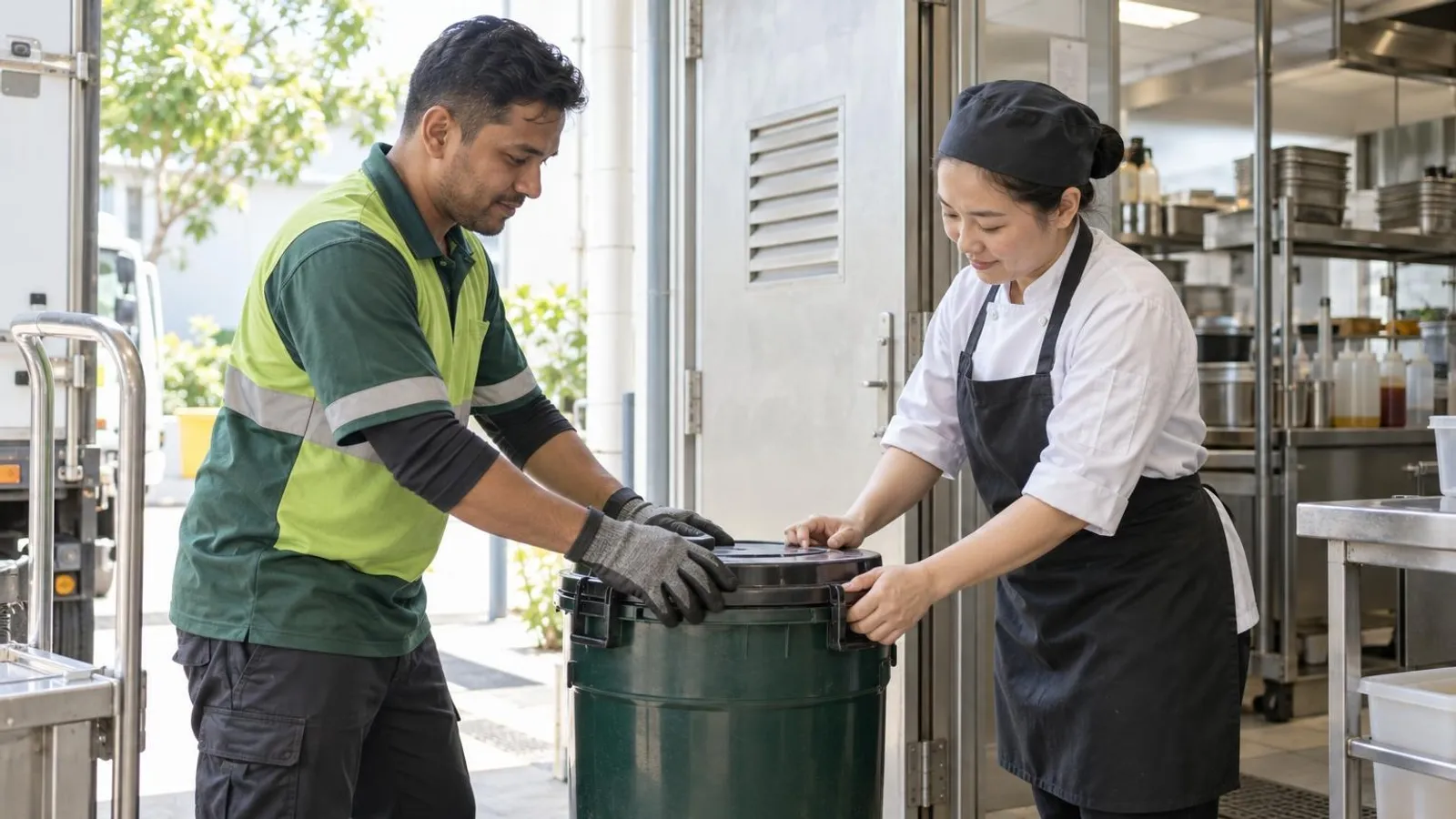
Every kitchen that fries, roasts or deep-cooks ends up with used oil, and pouring it down a drain is a problem for pipes and sewers. A specialist collector takes it away in drums or tanks and sends it on to be refined into biofuel or similar products. This list covers six Singapore companies that publish a collection service for restaurants, hotels, food manufacturers and other food businesses. Each entry says what the company's own site describes, how to enquire and what it leaves unsaid, so you can shortlist two or three and ask about pickup frequency, containers and payment terms. We have not reproduced prices or rebate figures because none are published.
1. Alpha Biofuels
Alpha Biofuels runs a collect-and-refine loop for used cooking oil from its base in Tuas. Its site describes recovering used oil from local businesses and communities, refining it into biodiesel and supplying the fuel to generators, fleets and industrial users. For a kitchen, the routes it publishes are clear: an online form to register an outlet for oil disposal, a request-collection form for existing partners, and a separate enquiry form for new collection customers, plus a downloadable disposal process guide. The company says it has operated since 2008 and states ISCC EU certification since 2018 and a biodiesel specification of EN 14214. Its pages do not say whether collection is free or paid, so ask when you register.
2. CITYGN Energy
CITYGN Energy presents itself as a traceable collector for the food and beverage sector. Its site says it collects used cooking oil from hotels and restaurants and channels it into renewable fuel, with each pickup logged, weighed and documented, including a timestamp, GPS location and photo evidence that it says clients' sustainability and operations teams can access. It describes regular pickup cycles matched to a kitchen's volume and a central depot meant to speed up ad hoc requests. Bookings go through a Book a Collection form, and a WhatsApp button is also shown. That record-keeping angle may suit hotel and restaurant operators who report on sustainability. The page does not explain how payment works, so raise it when you enquire.
Kampong Bahru
Visit website ↗View on map ↗
3. Skyland Bio-Energy
Skyland Bio-Energy says it collects used cooking oil from F&B outlets and food manufacturers across the island, and that the oil is processed into feedstock for biofuels. Its How It Works page sets out five steps: get a quote by phone, email or the contact form; drums are placed at your premises in sizes the page lists from 50kg up to 1,000kg; drivers collect the oil and pump it into a lorry tank; water and impurities are removed at its warehouse; then the oil is recycled into biofuel feedstock. The site also says the company was established in 2012 and works from Senoko. No payment terms appear on the page, so ask about them when requesting a quote.
4. Go Green Recycle Oil
Go Green Recycle Oil describes itself as a waste cooking oil management partner for business customers, operating from Ace@Buroh in the Jurong area. Its site states that it is NEA licensed and bizSAFE certified and calls itself a licensed used cooking oil collector; those are the company's own statements, so check any licence with the issuing body. It says it serves more than 150 customers, began in 2014 and moved into its current facilities in 2017, and it offers an enquiry form, a phone line and a sales email. The page also mentions ISCC self-declarations for oil deliveries as part of its customer contract. Container and payment details are not published, so ask before you commit.
Jurong (Buroh)
Visit website ↗View on map ↗
5. Galon Bioenergy
Galon Bioenergy offers used cooking oil collection and disposal, with the oil sold on as feedstock for biofuel refining. Its site leads with a get-paid-by-recycling pitch and says it supplies recycling drums free of charge in a range of sizes to suit customers. The company states that it is licensed by the National Environment Agency as a Class B.1 General Waste Collector, which is its own statement and worth confirming with the agency. It describes itself as new to the market but committed to service quality, and it takes enquiries through an online contact form, with a main office that its site lists as open on weekday daytime hours. It publishes no rates, so ask what applies to your volume.
Singapore-wide service
Visit website ↗View on map ↗
6. An Chang Shun
An Chang Shun operates a buy-back service for used cooking oil from its base on Tagore Lane, near Yio Chu Kang. Its site says the company handles collected oil professionally, that customers can benefit financially while helping the environment, and that the oil is converted into resources such as biodiesel and soap. A testimonial on the page comes from a Japanese restaurant, though the site does not define its target customers. It publishes a phone number, a general email address and a contact form, but no pricing, pickup schedule or container details, so those are questions for the team. Its blog carries a 2023 post on the outlook for the used cooking oil market.
Tagore Lane (Yio Chu Kang)
Visit website ↗View on map ↗
How to choose
- Ask about pickup frequency and what happens in a busy week. Busy kitchens fill drums faster than expected, so find out how soon the collector can respond to an ad hoc call, whether it works to a fixed schedule, and what you should do if a drum is full before the next visit.
- Check containers before you sign. Some collectors publish drum sizes or say they place drums at your premises, while others do not mention containers at all. Ask who supplies them, what capacity fits your volume, where they must be stored, and who is responsible for cleaning or replacing them.
- Clarify how payment works. Several collectors describe buy-back or get-paid models, but none of the pages we read publish rates. Ask whether oil is bought or collected for a fee, how often payment is made, and what quality or contamination limits could change the arrangement.
- Ask for proof of the collector's licensing and paperwork. Where a company states a licence or certification, treat it as its own statement and check the details with the issuing body. Also ask what record it gives you after each pickup, since many businesses need documents for audits.
- Keep the oil clean and separate. Collectors generally want used cooking oil without water, food scraps or other waste mixed in. Ask what they accept, whether grease trap waste is handled separately, and how mixed or contaminated drums are treated before a booking is confirmed.
. No changes recorded since.
Founder and Editor
Amir Wahab is the founder and editor of LocalRank, an independent Singapore rankings and local guides publication.
Read next

6 Best Motorcycle Rental Companies in Singapore (2026)
Compare 6 motorcycle and scooter rental companies in Singapore, from Class 2B hire to long-term leasing, with what each says it offers and how to enquire.
By Amir Wahab5 min read

7 Best Invisible Grille and Safety Netting Installers in Singapore (2026)
Compare 7 invisible grille, cat mesh and safety netting installers in Singapore for HDB, condo and landed homes, with what each company says it offers.
By Amir Wahab5 min read
7 Best Roller Shutter and Industrial Door Suppliers in Singapore (2026)
Seven roller shutter and industrial door suppliers in Singapore, from shopfront and fire-rated shutters to high-speed and sectional doors, plus tips.
By Amir Wahab5 min read
6 Best Car Upholstery and Seat Cover Specialists in Singapore (2026)
Six Singapore workshops for car leather seats, re-trimming, roof lining and interior trim, with what each says it offers and how to choose well.
By Amir Wahab5 min read