13 Best Sushi Restaurants in Singapore
From high-end Edomae omakase counters to casual conveyor-belt spots, here are 10 places for great sushi in Singapore, checked against their own sites.
- Edited by
- Amir Wahab
- Published
- Reading time
- 6 min read
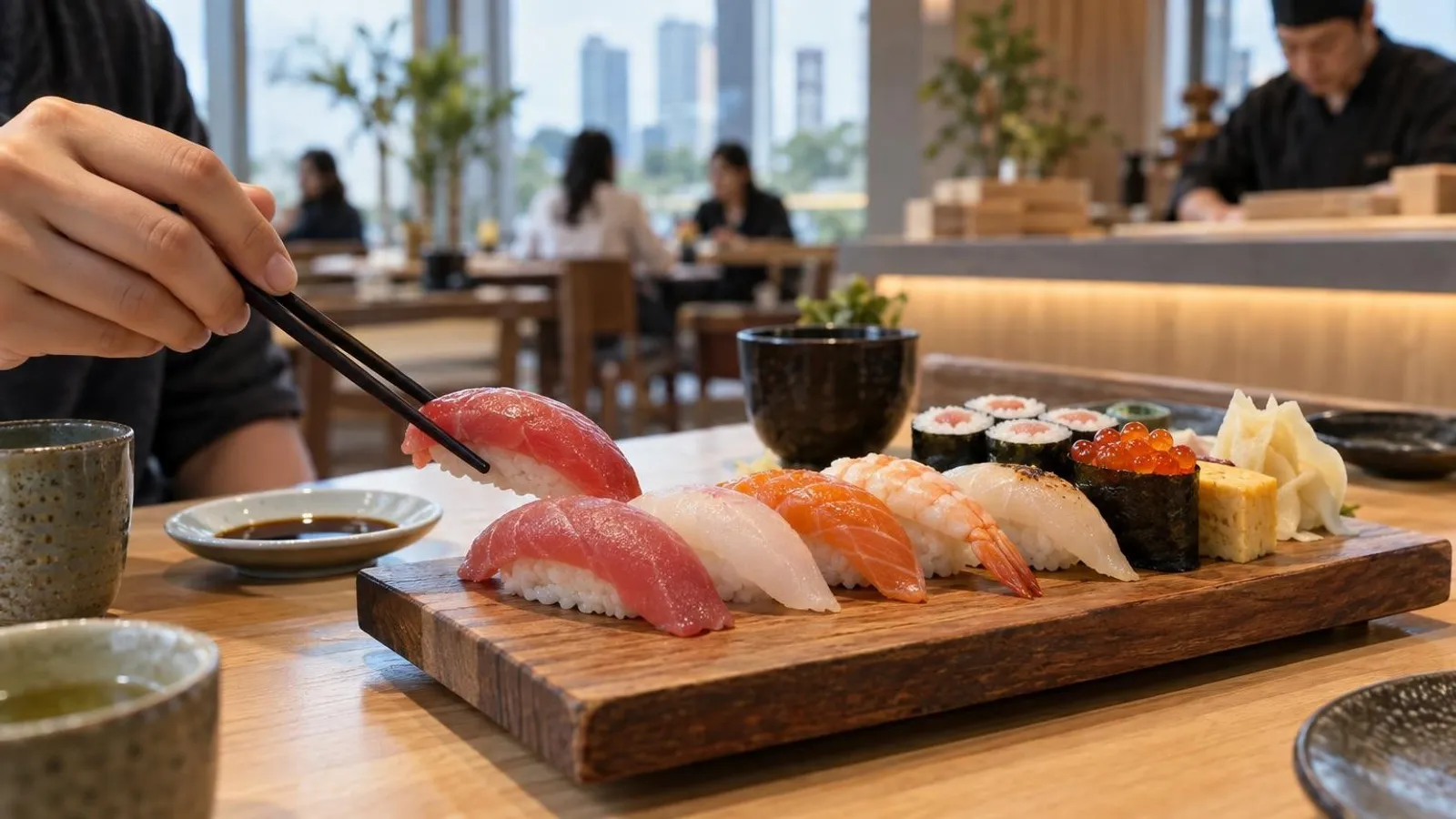 AI image by LocalRank
Singapore's sushi scene runs the full spectrum, from hushed Edomae omakase counters flying fish in from Japan to buzzy conveyor-belt chains built for a quick, affordable meal. This guide gathers thirteen spots for sushi in Singapore, spanning splurge-worthy chef's counters and everyday favourites, with each restaurant checked against its own website or well-established presence. Treat it as a shortlist to explore, not a strict ranking.
1. Shoukouwa
Shoukouwa is an intimate Edomae omakase counter overlooking Marina Bay at One Fullerton, which its own site bills as a 'Two Michelin Star Edomae Omakase.' The kitchen says it works with 'a handful of select suppliers' and uses seafood 'flown daily from Tokyo's Toyosu Market,' shaping each piece to order at the counter. It sits firmly at the splurge end of Singapore's sushi scene, built around a chef's-choice tasting rather than a la carte ordering.
One Fullerton
Visit website ↗EmailView on map ↗
2. Sushi Kimura Plus
Sushi Kimura Plus is chef Tomoo Kimura's nine-seat Edomae omakase inside Conrad Singapore Orchard, which the restaurant describes as 'a deeply personal omakase shaped by three decades of craft.' Kimura is known for his work ageing fish, and the counter serves an ultra-intimate, chef-prepared progression with, in its words, 'nothing between you and the craft.' It is a high-end, reservations-only experience for diners after a specialist take on aged-fish sushi.
Orchard
Visit website ↗View on map ↗
3. Ginza Sushi Ichi
Ginza Sushi Ichi brings its Ginza, Tokyo lineage to a hinoki-wood counter at Singapore Marriott Tang Plaza on Orchard Road, serving traditional Edomae sushi. The restaurant emphasises seasonal seafood and vegetables from Japan and rice marinated with red or white vinegar, delivered as an omakase course with both lunch and dinner options. Expect a formal, premium counter experience rather than casual a la carte dining.
Orchard
Visit website ↗View on map ↗
4. Sushi Mitsuya
Sushi Mitsuya, on Tras Street in Tanjong Pagar, offers what it calls 'an intimate omakase experience' at a hinoki counter led by head chef Ryosuke Harada. The style blends, in the restaurant's words, 'refined Edo-mae traditions together with his signature Harada-style creations,' using seafood flown in from Japan. It is a splurge-tier, counter-only omakase rather than an a la carte sushi bar.
Tanjong Pagar
Visit website ↗EmailView on map ↗
5. Iyasaka by Hashida
Iyasaka by Hashida is the latest concept from celebrated chef Kenjiro 'Hatch' Hashida, now at Raffles Sentosa, and the successor to his long-running Hashida sushi restaurant. The restaurant frames its omakase as 'a diverse array of traditional Japanese dishes with his signature contemporary twist,' built on premium seasonal ingredients and a strong Edomae sushi foundation. This is a fine-dining, chef-driven omakase at the higher end of the scale.
6. Teppei Japanese Restaurant
Teppei Japanese Restaurant, tucked into Orchid Hotel at Tras Link, helped popularise the affordable omakase in Singapore and is helmed by chef Yamashita. Its single counter seats only about a dozen diners for a multi-course chef's selection, and it is just as well known for its barachirashi, a bowl of assorted sashimi over rice, at lunch. Reservations are essential and released well in advance, making seats notoriously hard to get; it sits at the value end for omakase.
Tanjong Pagar
View on map ↗
7. Standing Sushi Bar
Standing Sushi Bar has served, in its words, 'high-quality, healthy, affordable' Japanese food since 2009, taking its cue from the standing sushi bars of Tokyo. It focuses on handmade sushi and fresh fish alongside robatayaki and tempura, and stocks one of the larger sake selections around. With several outlets across the city, it is a casual, mid-priced sit-down option rather than a special-occasion counter.
8. Sushi Tei
Sushi Tei is a long-running casual chain serving a broad a la carte menu of sushi, sashimi and cooked Japanese dishes, with a rotating line-up of seasonal specials. With more than a dozen outlets in malls across Singapore, it is an accessible, family-friendly sit-down option rather than a chef's counter. Prices sit in the everyday mid-range, and you order from the menu rather than a set omakase.
9. Genki Sushi
Genki Sushi is a Japanese-origin kaiten (revolving) sushi chain with many outlets across Singapore, known for its high-tech ordering: you tap a touchscreen and dishes arrive on an express 'Kousoku Train' rather than a traditional belt. It leans on quick, contemporary, value-priced plates aimed at families and casual diners. This is fast, fun, order-and-go sushi rather than an omakase experience.
10. Sakae Sushi
Sakae Sushi is one of Singapore's most familiar conveyor-belt (kaiten) chains, running since 1997 with outlets across the island. It uses a simple tiered, plate-colour pricing system for accessible everyday sushi, sashimi and Japanese standards. Squarely at the value, casual end of the scale, it is built for quick, no-frills meals rather than a curated counter.
11. Sushiro
Sushiro is the Singapore arm of Japan's largest kaiten, or conveyor-belt, sushi chain, which its own site says pioneered the format in Japan in 1984 and now calls itself the 'World's No.1 Sushi Brand.' The chain runs a sizeable network of outlets across Singapore, including a branch at Jewel Changi Airport, rotating more than a hundred sushi and side-dish varieties past diners at accessible, plate-priced points throughout the day. It is a distinct operation from Singapore's homegrown kaiten chains, built on decades of conveyor-belt know-how from the original Japanese brand rather than a local start-up. This is fast, value-driven, family-friendly sushi rather than a curated counter, and a dependable pick when you want quantity and variety without booking ahead.
12. Keijo
Keijo is an Edomae-style sushi omakase inside Carlton Hotel Singapore, opened in 2025 in the space vacated when Shinji by Kanesaka consolidated its Singapore operations at The St Regis. The restaurant markets itself as carrying forward that 'Michelin Heritage,' with head chef Naoya Nakamura building each course around Tsuyahime rice from Yamagata Prefecture, which the kitchen says it seasons specifically for each cut of fish. Lunch and dinner omakase are both offered, with lunch the shorter, more accessible sitting and dinner the fuller, pricier progression. It sits in the premium bracket without quite reaching the very top tier, making it a reasonable step into hotel-based, chef-led omakase for diners who want Ginza-style tradition minus the longest waitlists.
Bras Basah
Visit website ↗EmailView on map ↗
13. Sushi Jin
Sushi Jin is a sushi bar from the Les Amis Group, tucked into Shaw Centre on Scotts Road since it opened in November 2014. It was built, in the group's words, to sit between 'the mass-market and fine-dining tier' of Japanese food in Singapore, pairing seafood the restaurant says is flown in from Tokyo's fish markets several times a week with a curated sake list. A small private sushi counter seating around five guests can be closed off for its own dedicated chef. It runs both an à la carte menu and set options, giving diners more flexibility than a fixed chef's-choice omakase. Expect premium ingredients and Les Amis polish at a noticeably gentler price than the group's flagship fine-dining rooms.
Orchard
Visit website ↗View on map ↗
How to choose
- Decide between omakase and a la carte first. Omakase means a set, chef's-choice progression, usually at a counter, by reservation and at a higher price, while a la carte and conveyor-belt spots let you pick dish by dish at your own pace. That single choice narrows the field fast.
- Match the setting to the occasion and budget. A hinoki-wood omakase counter is a special-occasion splurge, casual sit-down chains suit family meals, and conveyor-belt or express-train outlets are best for a quick, low-cost bite.
- For omakase, book early and check the format. The best counters seat only eight to a dozen diners, release seats weeks ahead and may set a fixed start time, so confirm the reservation policy, seating and any dietary flexibility before you go.
- Look at freshness and sourcing claims. Many higher-end sushi-ya say they fly seafood in from Japan several times a week; where that matters to you, read how each restaurant describes its own sourcing rather than relying on third-party lists.
- Confirm the outlet and opening hours before travelling. Chains have many branches with different hours and menus, while single-counter restaurants often close between lunch and dinner or on set days, so check the specific outlet you plan to visit.
. No changes recorded since.
Founder and Editor
Amir Wahab is the founder and editor of LocalRank, an independent Singapore rankings and local guides publication.
Read next
13 Best Omakase in Singapore (2026)
A guide to the best omakase in Singapore for 2026: thirteen currently operating sushi and kaiseki counters, from two-Michelin-starred rooms to value picks.
By Amir Wahab6 min read
10 Best Yakitori Restaurants in Singapore
From old-school charcoal grill houses to sake-led izakaya and premium omakase counters, here are 10 of the best yakitori in Singapore to try.
By Amir Wahab4 min read
10 Best Teppanyaki Restaurants in Singapore
From heritage hotel counters to standalone omakase grills, here are 10 of the best teppanyaki in Singapore for wagyu, seafood and chef-side theatre.
By Amir Wahab4 min read
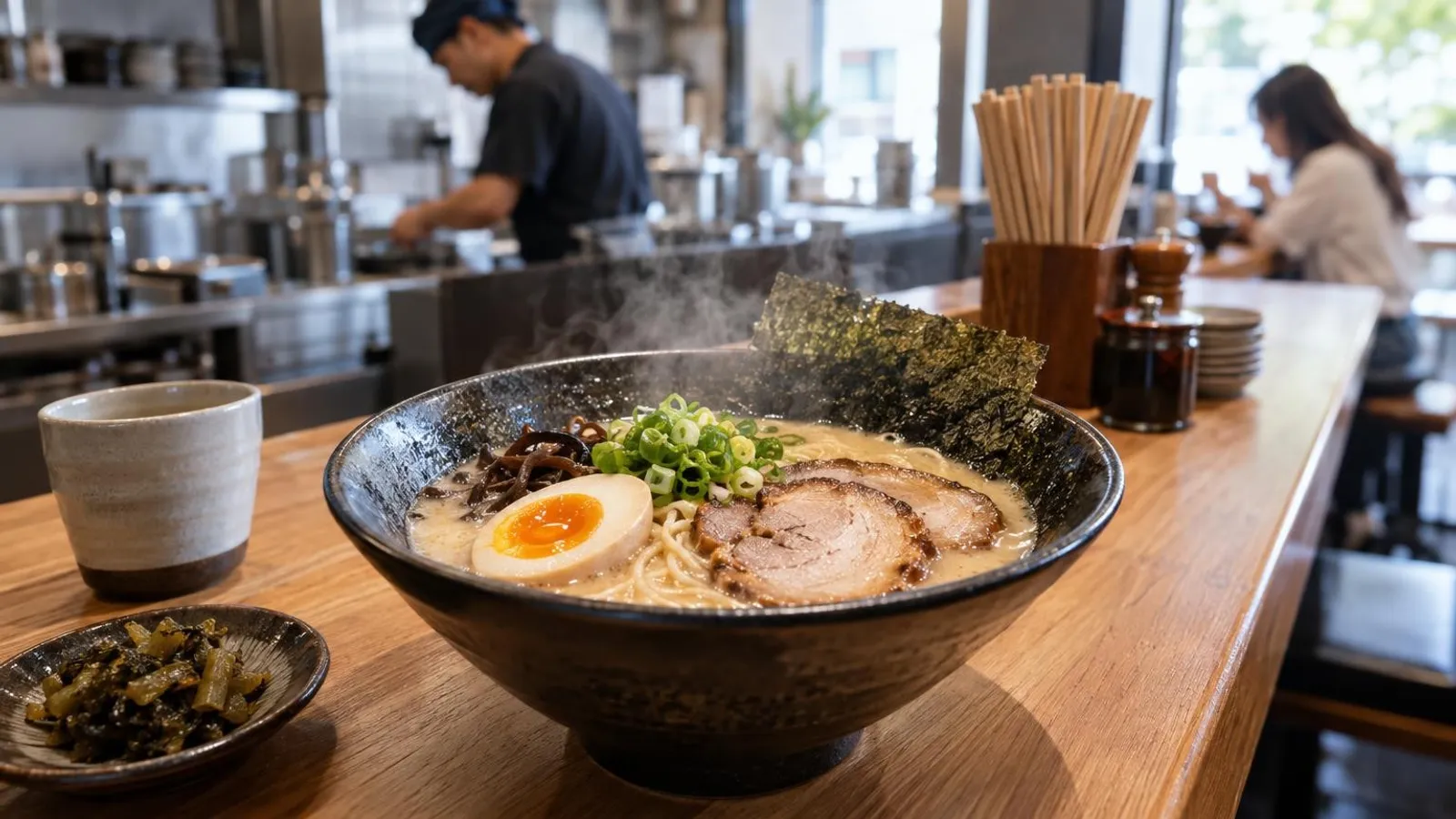
13 Best Ramen in Singapore
From Hakata tonkotsu to Niigata shoyu, shio, chicken paitan and tsukemen, here are 10 of the best ramen in Singapore, each checked against its own site.
By Amir Wahab6 min read