13 Best Ramen in Singapore
From Hakata tonkotsu to Niigata shoyu, shio, chicken paitan and tsukemen, here are 10 of the best ramen in Singapore, each checked against its own site.
- Edited by
- Amir Wahab
- Published
- Reading time
- 6 min read
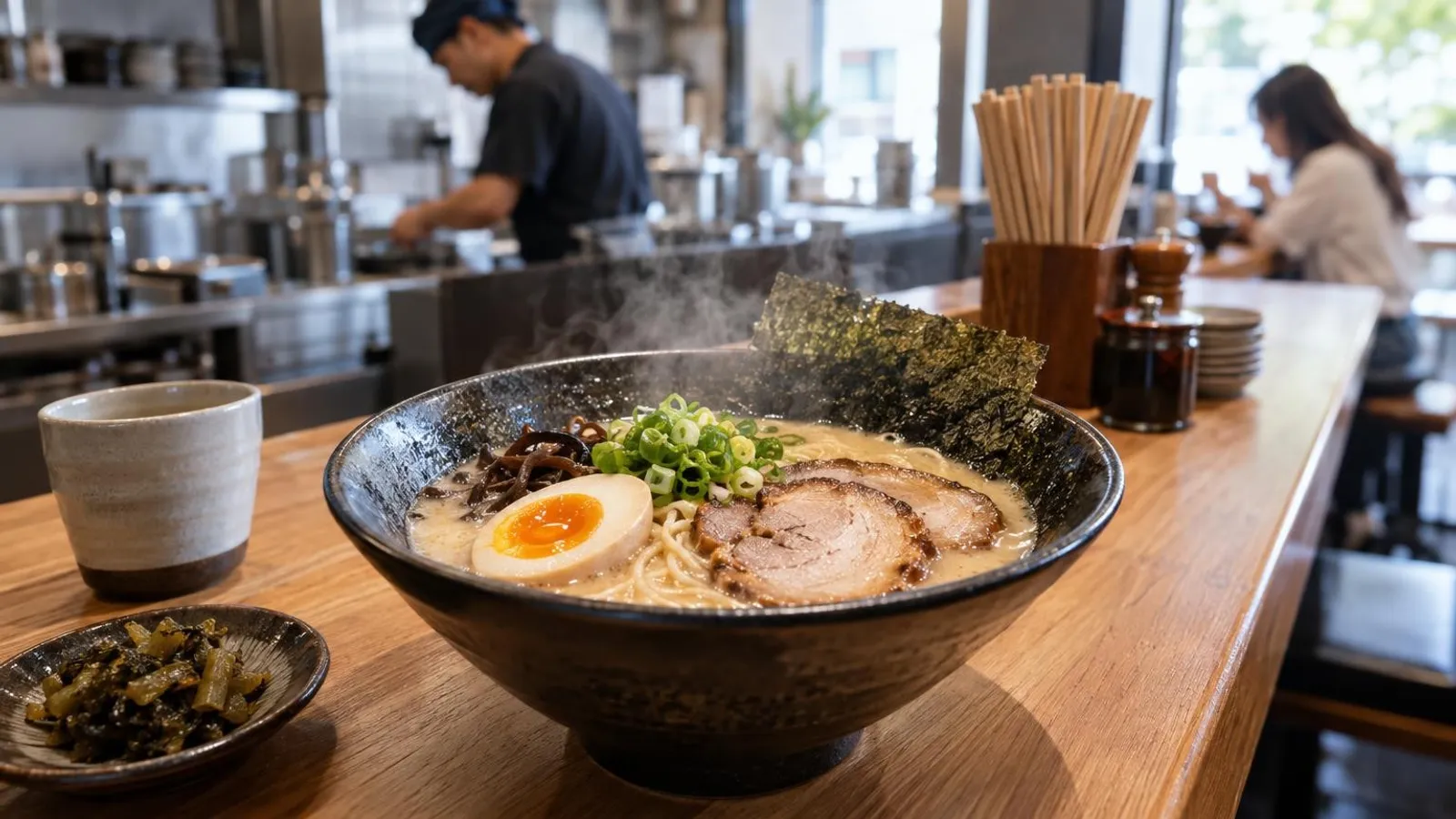 AI image by LocalRank
Ramen in Singapore has grown from a handful of Japanese imports into a deep and varied scene, and the best bowls now span rich Hakata tonkotsu, lighter Niigata shoyu, salt-based shio, chicken paitan and thick-noodled tsukemen. This guide gathers thirteen real, currently-operating ramen specialists, each checked against its own website or official listing. Treat it as a shortlist to match to your craving rather than a strict ranking.
1. Ippudo
Ippudo is one of Singapore's best-known ramen names, a Fukuoka export built on Hakata-style tonkotsu, a rich and milky pork-bone broth paired with thin, firm noodles. Its core bowls are the classic Shiromaru and the bolder Akamaru, the latter finished with a spicy miso-and-garlic paste, and it operates more than a dozen outlets across the island, including express counters at Changi Airport. Expect a modern, izakaya-style dining room rather than a tiny counter shop.
2. Ramen Keisuke
The Keisuke group runs one of the largest ramen operations in Singapore, split across several single-concept shops. Its flagship Tonkotsu King is built on a rich pork-bone broth, while the concepts it lists on its site also include a chicken-based Tori King and a Tokyo-style Ramen Dining Keisuke. Many of its tonkotsu outlets put out free flavoured eggs and beansprouts at the table, and you pick one specific bowl style rather than order from a broad menu.
Tanjong Pagar
Visit website ↗View on map ↗
3. Marutama Ramen
Marutama is a chicken-broth specialist whose signature, by its own description, is a collagen-rich tori paitan: a thick yet clean chicken soup pressure-cooked instead of the usual pork-bone stock. That makes it a natural choice for diners who avoid pork or prefer a lighter-tasting bowl, served with fine noodles and toppings such as extra spring onion. It lists several Singapore outlets, including ION Orchard, Millenia Walk, Bugis+ and Downtown Gallery.
4. Sanpoutei Ramen
Sanpoutei specialises in Niigata-style shoyu ramen, a clear, soy-based broth that its group traces to a Niigata shop dating back to 1967, simmered with pork bone, chicken and dried sardines for a fragrant, savoury finish. It is one of the better spots in Singapore for a lighter shoyu bowl rather than a heavy tonkotsu, and it has more recently added a tsukemen dipping-noodle option. Its outlets include Holland Village, Shaw House and Paragon.
Holland Village
Visit website ↗EmailView on map ↗
5. Menya Musashi
Menya Musashi serves a blended broth in the Tokyo style, combining pork tonkotsu with a seafood (gyokai) stock, and lets diners choose a white, black or red version of rising richness and spice. It is also one of the easier places here to try tsukemen, where thick noodles arrive separately for dipping into a concentrated soup. It runs mall outlets including Takashimaya, VivoCity, Bugis Junction and The Star Vista.
6. Takagi Ramen
Takagi Ramen is a homegrown Singapore chain built around everyday, affordable bowls, and its site says it charges no GST or service charge. The mainstay is a tonkotsu-style pork-bone ramen with spicy and other variations, served quickly in a casual order-at-counter setting. Several of the outlets listed on its own site run 24 hours, making it a rare choice for a late-night or supper ramen.
7. Menya Sanji
Menya Sanji is a Kagoshima-style ramen shop from southern Kyushu, known for a thick, almost white tonkotsu broth that it describes as boiled down from pork bones and pork head. The result is a heavy, collagen-rich pork soup aimed at diners who want an intense tonkotsu rather than a delicate one. It is tucked inside Orchid Hotel on Tras Link in Tanjong Pagar.
Tanjong Pagar
View on map ↗
8. Kanshoku Ramen
Kanshoku is a homegrown ramen brand best known for its truffle ramen, served both as a dry (brothless) bowl and in a truffle-scented soup, alongside a standard tonkotsu option. Its site says the noodles are made fresh in-house daily in a Hakata style. You will find it in and around Orchard, including its Orchard Gateway outlet.
Orchard Gateway
Visit website ↗View on map ↗
9. Nantsuttei
Nantsuttei is a Tokyo ramen shop whose signature is a tonkotsu bowl finished with black mayu, a dark roasted-garlic oil that adds a smoky, bittersweet depth over the creamy pork-and-chicken broth. It sits at the more affordable end for a specialist ramen-ya and is a solid pick if you like a bold, garlicky bowl. Its Singapore outlet is on the upper floors of Orchard Central.
Orchard Central
View on map ↗
10. A Noodle Story
A Noodle Story began life as a single stall in Amoy Street Food Centre and is now one of the best-known names in Singapore ramen precisely because it breaks from Japanese convention. Its "Singapore-style ramen" tosses springy noodles in a hawker-inspired sauce with a potato-wrapped prawn, sous-vide pork belly, wontons and a lava egg, rather than serving a Japanese-style broth. The concept has held a Michelin Bib Gourmand recognition for ten consecutive years running through the 2026 guide, a rare feat for a hawker stall. Its official Instagram lists outlets at the original Amoy Street stall, The Metropolis and Changi Airport's Terminal 1 departure area. Go here if you want Singapore's own spin on the format rather than an imported style.
Amoy Street Food Centre
Visit website ↗View on map ↗
11. AFURI
AFURI is a Tokyo ramen brand named after Mount Afuri in Kanagawa, and its signature departure from the usual heavy bowl is a yuzu-scented broth rather than a straight pork or chicken base. The Singapore menu centres on a chintan-style broth simmered at a lower, gentler temperature, offered as a citrusy Yuzu Shio, a soy-based Yuzu Shoyu, or a spicier Yuzu Ratan, each finished with a slice of pork, bamboo shoots and mizuna leaf. It is a lighter, more fragrant bowl than a typical pork-bone tonkotsu, and a useful pick for a reader who finds that broth too heavy or wants a change of pace. AFURI first opened in Singapore at Funan and has since added an outlet at VivoCity.
12. Menya Kokoro
Menya Kokoro is a mazesoba specialist, serving Japan's "mixed noodle" format: thick, bouncy noodles arrive with little or no broth, tossed with a slow-cooked minced meat sauce, a soft egg and fresh toppings rather than served swimming in soup. Its own site says the concept has been named "Best Mazesoba" by Tokyo Ramen of the Year across several years since opening in Tokyo in 2013, and each bowl comes with a small mushroom-and-kombu soup on the side plus a scoop of rice for mixing with the sauce left once the noodles are gone. It is one of the few Singapore shops built entirely around this drier, saucier style. Its outlets include Suntec City, 100AM and Plaza Singapura.
Suntec City
Visit website ↗View on map ↗
13. Mensho Tokyo
Mensho Tokyo is the Singapore outpost of a Tokyo ramen group founded by chef Tomoharu Shono, whose original Tokyo shop and its San Francisco offshoot have both been written up in their respective Michelin guides, and which food press widely describes as a past Tokyo Ramen of the Year winner. Its own site describes a toripaitan-led broth, a creamy chicken-based soup finished with a house blend of five white peppers for aroma, alongside a Chilli Crab ramen made specifically for the Singapore market and modelled on the local dish. It sits inside Raffles City with full-height glass walls rather than a hole-in-the-wall counter, and is one of the more chef-driven, globally-recognised names to have opened here rather than a homegrown or chain operation.
Raffles City
Visit website ↗View on map ↗
How to choose
- Start with the broth. Tonkotsu is the rich, creamy pork-bone style; shoyu is a lighter soy-based soup; shio is salt-based and clean; miso is thicker and sweeter; and chicken paitan skips pork entirely. Knowing which you want narrows the field fast.
- Decide between a soup bowl and tsukemen. Tsukemen serves thicker noodles separately for dipping into a concentrated broth, which some diners prefer over noodles sitting in soup, so check whether the shop offers it.
- If you avoid pork, look specifically for chicken-broth (tori paitan) or seafood-based bowls and confirm directly, since most tonkotsu shops cook pork throughout and few Singapore ramen shops are halal-certified.
- Check how customisable the bowl is. Some shops let you choose broth richness, noodle firmness, spice level and toppings such as extra chashu, a flavoured egg or black garlic oil, which matters if you like a milder or a bolder bowl.
- Consider location and timing. Popular counters are small and queue at peak lunch and dinner, most take walk-ins rather than reservations, and only a few open late, so go off-peak or pick a 24-hour outlet if you want a supper bowl.
. No changes recorded since.
Founder and Editor
Amir Wahab is the founder and editor of LocalRank, an independent Singapore rankings and local guides publication.
Read next
13 Best Omakase in Singapore (2026)
A guide to the best omakase in Singapore for 2026: thirteen currently operating sushi and kaiseki counters, from two-Michelin-starred rooms to value picks.
By Amir Wahab6 min read
10 Best Yakitori Restaurants in Singapore
From old-school charcoal grill houses to sake-led izakaya and premium omakase counters, here are 10 of the best yakitori in Singapore to try.
By Amir Wahab4 min read
10 Best Teppanyaki Restaurants in Singapore
From heritage hotel counters to standalone omakase grills, here are 10 of the best teppanyaki in Singapore for wagyu, seafood and chef-side theatre.
By Amir Wahab4 min read
13 Best Sushi Restaurants in Singapore
From high-end Edomae omakase counters to casual conveyor-belt spots, here are 10 places for great sushi in Singapore, checked against their own sites.
By Amir Wahab6 min read