7 Best Meditation and Sound Bath Classes in Singapore (2026)
Compare 7 meditation and sound bath classes in Singapore: Buddhist centres, mindfulness courses, group sittings and studios with gong and bowl sessions.
- Edited by
- Amir Wahab
- Published
- Reading time
- 5 min read
 AI image by LocalRank
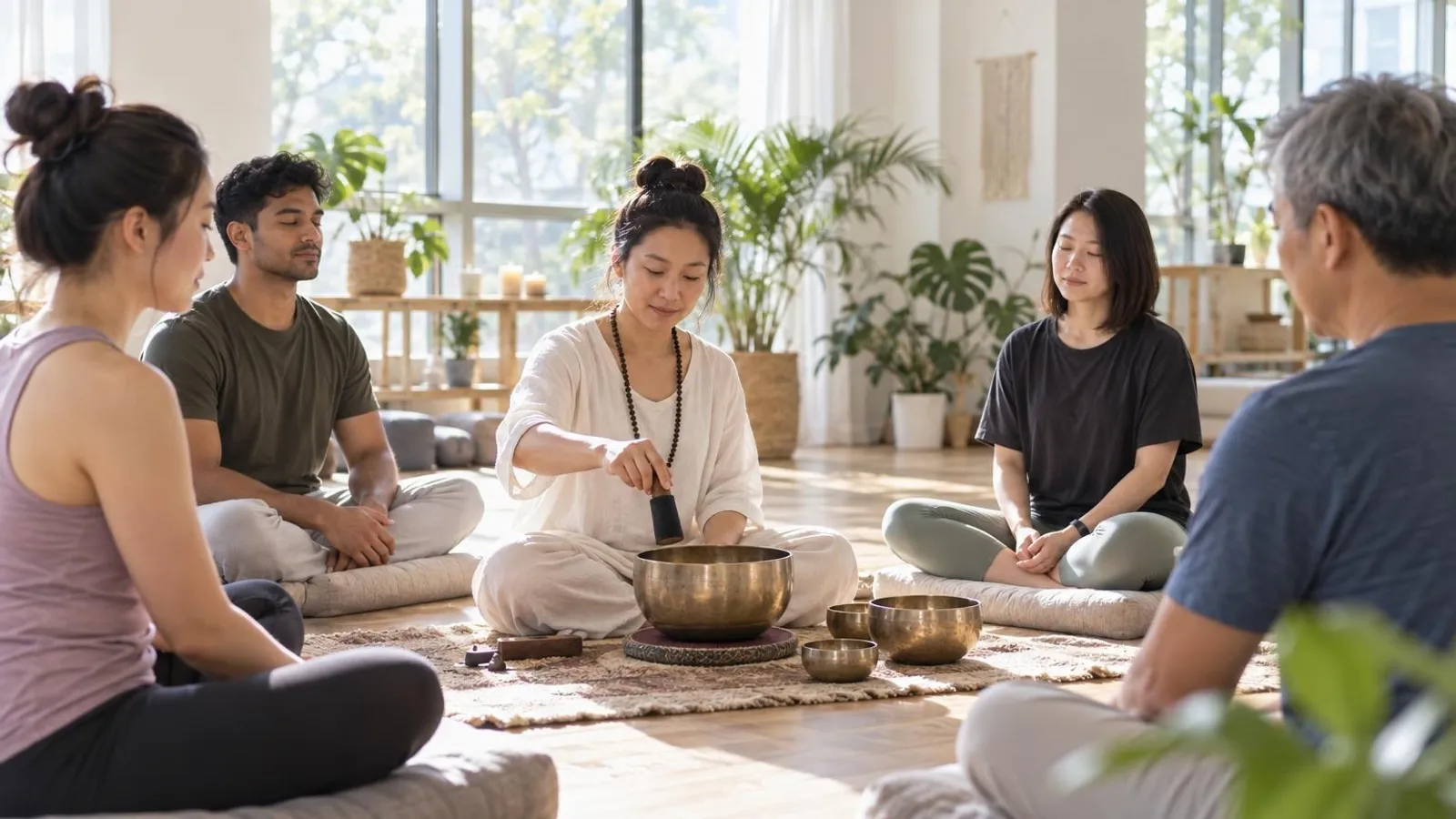
Meditation in Singapore now spans quiet Buddhist halls, charity-run mindfulness courses, weekly group sittings and boutique studios that play gongs and singing bowls while you lie down. This list brings together seven places that publish their own sessions, so you can compare formats instead of guessing. We describe each one using what its website or organiser page says, and we leave out prices because schedules and fees change often. Read the notes on teaching tradition carefully, since several of these groups are rooted in a particular lineage. Use the choosing tips at the end to match a format to your routine, then confirm dates directly with the organiser before you go.
1. Kadampa Meditation Centre Singapore
Kadampa Meditation Centre Singapore describes itself as a modern Buddhist centre that welcomes everybody to explore meditation. Its homepage lists a weekly Meditation and Buddhism for Daily Life class on Tuesday evenings or Wednesday mornings, offered in person or online, plus a guided lunchtime meditation on Tuesdays and Fridays that runs for roughly half an hour. Half-day retreats on selected Sundays and a longer foundation programme also appear on the site, along with a Kadampa meditation app the centre recommends for guided practice. Because the classes come from a Buddhist tradition, expect Buddhist teachings alongside the meditation instruction. Check the site calendar for the current course dates, and see its getting-here page for directions before your first visit.
Kampong Glam
Visit website ↗WhatsApp ↗View on map ↗
2. Brahm Centre
Brahm Centre is a Singapore charity whose website says it teaches mindfulness through structured courses. Its mindfulness section lists a Mindfulness Foundation Course, a Chinese-language version, eight-week Mindfulness-Based Stress Reduction and Mindfulness-Based Cognitive Therapy programmes, a Mindfulness Compassion Course and retreats, together with guided audio practices in English and Chinese. The centre also runs customised workshops for organisations, and its course pages explain who each programme is aimed at. Its site lists nine neighbourhood centres, including Newton, MacPherson and Tampines, so you can look for one close to home. This is a course-based route rather than a drop-in sit, so read each course page for the format and sign-up steps. The site notes the organisation is a registered charity.
Newton, MacPherson and Tampines
Visit website ↗WhatsApp ↗View on map ↗
3. Heartfulness Meditation Center Singapore
Heartfulness Meditation Center Singapore is the local base of an international meditation practice. The centre's contact page lists group meditation sessions on Sunday mornings and Wednesday evenings at its hall in an industrial building off New Industrial Road. Its Singapore pages also point visitors to online meditation, trainer-led sessions and a find-a-trainer tool, and they describe a quiet hall alongside a reading room and refreshment area. The site invites newcomers to book a one-to-one session with a trainer to learn the basics, which suits people who like a guided introduction before joining a group sitting. The practice has a spiritual outlook, so read the about pages to see whether the approach feels right for you.
MacPherson
Visit website ↗View on map ↗
4. Sri Chinmoy Meditation Singapore
Meditation Singapore is the public face of the local Sri Chinmoy Centre, and its website says it offers free meditation classes to the general public. Rather than a fixed weekly timetable, the site publishes dated events. Its 2026 listings include a five-day meditation festival in May and a four-day Mastering Meditation course in July, both held at a community venue in Toa Payoh, with workshops led by visiting teachers. The pages explain the group's approach, which draws on the teachings of Sri Chinmoy, and an on-site form lets visitors ask questions or register interest. If you prefer short courses with a named teacher over an open-ended membership, this is worth following. Always confirm venue and registration details on the events page.
5. Unika Yoga & Therapy
Unika Yoga & Therapy is a yoga studio whose website carries a dedicated page on sound bath sessions. It says participants lie down while singing bowls, gongs, chimes and other instruments are played, that sessions run for roughly an hour and a quarter to an hour and a half, and that mats, blankets, bolsters and eye pillows are provided. The page says no previous experience is needed and describes the sessions as small and personal. The studio also publishes articles about sound healing and lists upcoming events, so you can see what is on before booking. It is a sensible fit if you would like a sound session from a studio that also teaches regular yoga classes.
6. SPACE2B
SPACE2B describes itself on its organiser page as a collective of mindfulness mentors running a meditation studio in Tanjong Pagar. That page says the studio offers weekly sound healing, meditation and somatic sessions, with monthly special events. Its public listings include yoga nidra paired with gongs and Tibetan singing bowls, and breathwork sessions accompanied by bowls, taught by different mentors on different days. Time Out Singapore has also written about its gong-based sessions. Listings mention a studio membership alongside single bookings, so ask about the booking route when you enquire. The studio's own website was behind bot protection when we checked, so we relied on its organiser profile and press coverage. Confirm current session times with the studio before travelling.
Tanjong Pagar
Visit website ↗View on map ↗
7. Future Resonance
Future Resonance is a wellness studio at New Bahru that, according to a May 2026 Fact Magazines feature, brings sound healing, breathwork, yoga, meditation and Light Sound Vibration sessions under one roof. The feature describes a Solar Room for grounding sound-healing practices using acoustic instruments, and a Lunar Room where synchronised sound is paired with lighting. HerWorld, writing in August 2026, described a sixty-minute session in which guests rest on individual waterbeds while sound and light surround them, which is quite different from a classic mat-based sound bath. The studio has a website, but its page did not display readable details when we checked, so confirm session types and booking steps with the studio directly.
New Bahru
Visit website ↗View on map ↗
How to choose
- Decide whether you want to sit and train your attention or lie down and receive sound. Meditation courses and group sittings ask you to practise something, while sound bath sessions are usually passive. Studios such as Unika and SPACE2B publish the second format, and the temple-style centres focus on the first.
- Notice the tradition behind a class. Kadampa, Heartfulness and the Sri Chinmoy group each teach from a particular lineage, and Brahm Centre teaches secular-style mindfulness courses. Read the about pages, ask what a session includes, and choose the approach that feels comfortable rather than the one with the loudest marketing.
- Match the format to your calendar. A weekly lunchtime sit, an eight-week course, a one-off event and a membership each demand different commitment. Look at how often a provider runs sessions, whether online attendance is offered, and whether the booking steps allow you to try one visit before you commit.
- Treat wellness wording with care. Studios often describe benefits such as relaxation or balance in their own words, and those descriptions are the provider's claims rather than established outcomes. If you live with a health condition or are pregnant, ask the provider what a session involves and speak to your own doctor first.
- Check the practicalities directly. Ask where the session is held, what to bring, how late arrivals are handled, and who leads it. Schedules for events and special series change, and some studios take bookings only through ticketing pages, so confirm current dates with the organiser before you set out.
. No changes recorded since.
Founder and Editor
Amir Wahab is the founder and editor of LocalRank, an independent Singapore rankings and local guides publication.
Read next

6 Best Motorcycle Rental Companies in Singapore (2026)
Compare 6 motorcycle and scooter rental companies in Singapore, from Class 2B hire to long-term leasing, with what each says it offers and how to enquire.
By Amir Wahab5 min read

7 Best Invisible Grille and Safety Netting Installers in Singapore (2026)
Compare 7 invisible grille, cat mesh and safety netting installers in Singapore for HDB, condo and landed homes, with what each company says it offers.
By Amir Wahab5 min read

7 Best Roller Shutter and Industrial Door Suppliers in Singapore (2026)
Seven roller shutter and industrial door suppliers in Singapore, from shopfront and fire-rated shutters to high-speed and sectional doors, plus tips.
By Amir Wahab5 min read
6 Best Car Upholstery and Seat Cover Specialists in Singapore (2026)
Six Singapore workshops for car leather seats, re-trimming, roof lining and interior trim, with what each says it offers and how to choose well.
By Amir Wahab5 min read