6 Best Karate and Judo Classes in Singapore (2026)
Looking for karate or judo classes in Singapore? Compare six dojos and clubs for kids and adults, from Shotokan and Kyokushin to community judo clubs.
- Edited by
- Amir Wahab
- Published
- Reading time
- 5 min read
 AI image by LocalRank
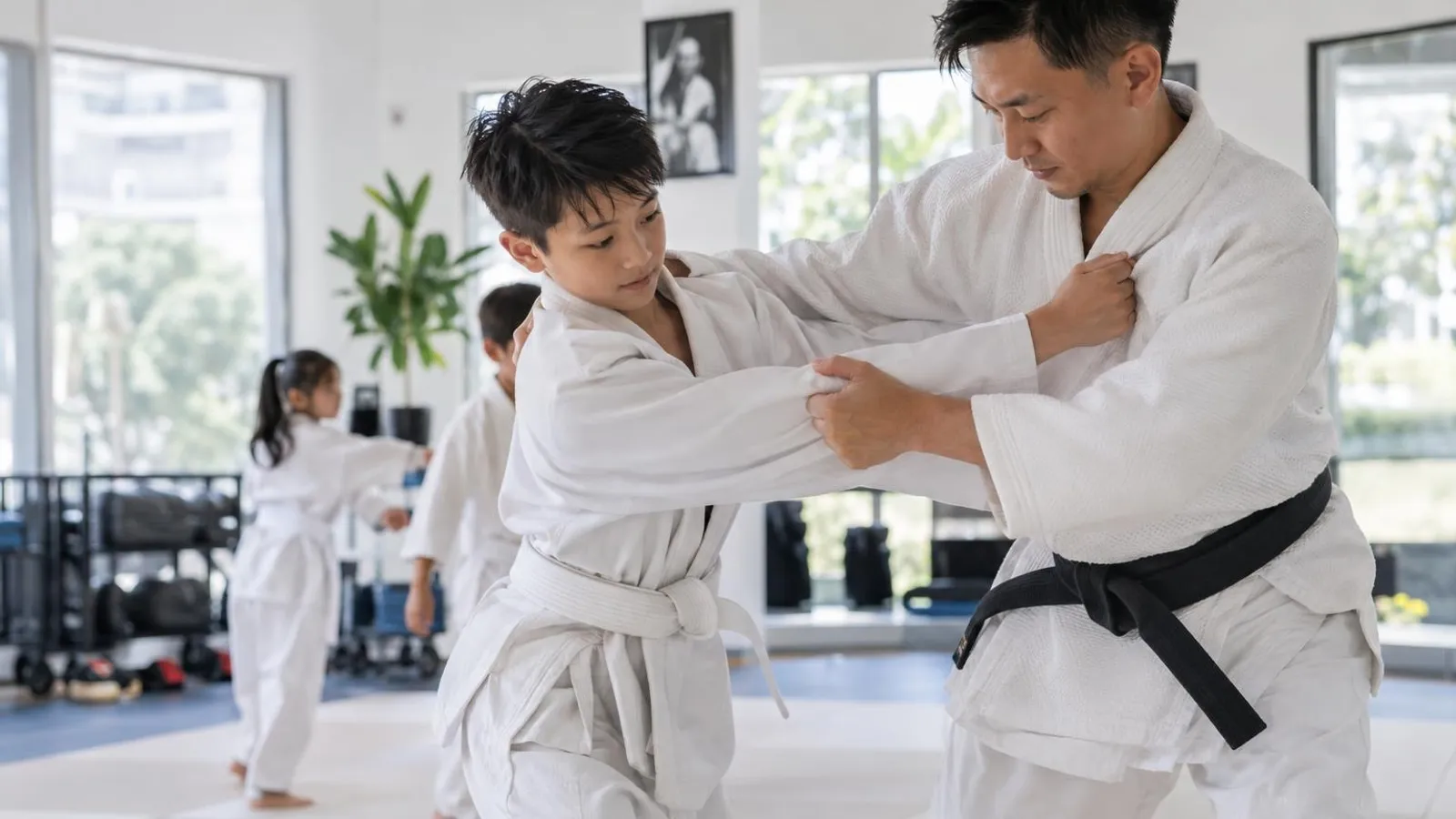
Karate and judo are two of the most established martial arts in Singapore, but they are very different to learn. Karate is mainly striking, taught through basics, forms and sparring, while judo is a throwing and grappling art practised in a gi on mats. This guide gathers six providers whose own websites show current karate or judo classes, from community-club dojos to multi-sport academies. Each write-up is based on what the provider publishes, so check its site for the latest timetable, venue and enrolment steps. Use the choosing tips at the end to decide which art and which setting suits you or your child.
1. Japan Karate Association (JKA) Singapore
The Singapore branch of the Japan Karate Association presents itself as a teacher of Shotokan karate, and its join page lists weekly sessions across four community club venues, including Jalan Besar, Kolam Ayer, Kampong Ubi and Leng Kee. The timetable shows a kids slot at Leng Kee, several all-levels classes, and a brown-and-black-belt session at Jalan Besar. Its Our Sensei page profiles the instructor, Tan Soo Lin, as a coach with decades of karate experience, and says enrolment is handled at each community club's reception counter. The site also publishes a dojo kun, the code of conduct recited in class. For readers who want a traditional, community-club route into karate, this is a straightforward place to start.
Jalan Besar, Kolam Ayer and Leng Kee community clubs
Visit website ↗View on map ↗
2. Keiseikan Martial Arts
Keiseikan describes itself as a karate and kobudo dojo near Bendemeer and Lavender MRT stations, teaching under a single sensei who, according to its site, holds accreditation from the Inoue-ha Shito-Ryu Keishin-Kai and Kenshin-ryu Kobudo. Its karate pages say lessons centre on three elements, kihon basics, kata forms and kumite sparring, with separate kids and adult classes and periodic seminars led by visiting experts. The school says it owns its dojo and also offers it for rental. Free trial sign-up forms are linked from the site for both karate and the weapons-based kobudo class. It suits families wanting a Shito-ryu flavour in a central location, or adults curious about Okinawan weapons training alongside empty-hand karate.
Bendemeer and Lavender
Visit website ↗EmailView on map ↗
3. Singapore Judo Club
Singapore Judo Club says it was founded in 1954, is run entirely by volunteers on a not-for-profit basis, and is an affiliate of the Singapore Judo Federation. Its class page sets out separate programmes for children aged five to twelve, adult beginners, intermediates and advanced judoka, held on weekday evenings and Sundays at community club venues in the Geylang area. The site notes that some classes are full and offers a waitlist form, so new students should expect a wait. Trial classes are booked through its online form, and members reserve each weekly session through a booking portal described in its FAQ. A good fit for anyone wanting a long-established, community-run judo club rather than a commercial gym.
Geylang West
Visit website ↗View on map ↗
4. School of Judo
School of Judo describes a community of learners taught by coaches from varied backgrounds, and its timetable lists about nine sessions a week across three dojos in Serangoon, Clarke Quay and Farrer Park. Class types named on the site include judo basics, beginner, fundamentals, all-levels and technical sessions, plus a Saturday kids class, and a separate Brazilian jiu-jitsu slot at Serangoon. A coaches section profiles each instructor, mentioning backgrounds such as Southeast Asian Games participation and Korea Judo Federation dan rank, in the school's own words. Free trial sign-ups are taken through an on-site form that leads to a class booking platform. It will appeal to adults who want judo with a choice of weekday evening venues around central Singapore.
Serangoon, Clarke Quay and Farrer Park
Visit website ↗View on map ↗
5. Elite Coach Sports Academy
Elite Coach is a multi-sport academy rather than a judo specialist, but its site gives judo its own pages: one for judo and Brazilian jiu-jitsu for teens and adults, and another for kids. The adult page says the programme runs in association with School of Judo and the Singapore Judo Federation, welcomes any level from beginner to black belt, and holds weekly classes. The kids page says children can be graded in judo under the Judo Federation of Singapore and in BJJ under a separate academy standard, and describes an anti-bullying focus. The academy also teaches boxing, Muay Thai and swimming, so it suits families who want judo alongside other activities under one roof, with a trial offered through its contact route.
Novena and Farrer Park
Visit website ↗WhatsApp ↗EmailView on map ↗
6. Fight Academy Singapore
Fight Academy is a beginner-friendly martial arts gym on Joo Chiat Road, and its class list includes a Kyokushin karate programme described as suitable for all levels. According to the page, sessions cover drills, block-and-counter work and kata practice, in a supportive setting. The same timetable also covers Krav Maga, Brazilian jiu-jitsu, wrestling and kickboxing, and a separate kids and teens section is linked from the menu. Class schedules, bookings and package purchases are handled through its app, and trial classes are booked from its site. It is the one entry here that names Kyokushin as its karate style, and because it is a multi-discipline gym it suits adults who want to try karate alongside other combat sports.
How to choose
- Decide between striking and grappling first. Karate teaches punches, kicks, blocks and forms, with sparring introduced gradually, while judo focuses on gripping, balance and throws. Many people try a trial in each before committing, and several providers here describe free or trial sessions on their sites, so ask what a first visit involves.
- Look at the style and lineage a dojo names. Shotokan, Shito-ryu and Kyokushin differ in stance, pace and how much contact sparring involves. Ask which style the class follows, who teaches it, and how grading works, then compare that with the goals you have, whether fitness, discipline, competition or self-defence.
- Check class structure for your age and level. Look for separate beginner, kids and all-levels sessions, and note whether a class is currently full. Some clubs keep waitlists, so ask how places are allocated, and whether you can move up levels, join extra sessions or must stay in one weekly slot.
- Think about venue and travel. Community-club classes may be close to home and run in shared halls, while specialist dojos have their own mats and fixed equipment. Check the timetable against your schedule, the nearest MRT stop, and whether the venue suits young children travelling after school or work.
- Ask practical questions before signing up. Request the current fee structure in writing, what protective gear or uniform is needed, how long enrolments last, and what the instructor's own published credentials are. Check any affiliation or grading claim with the named federation or association rather than relying on a website alone.
. No changes recorded since.
Founder and Editor
Amir Wahab is the founder and editor of LocalRank, an independent Singapore rankings and local guides publication.
Read next
7 Best Multi-Sport Classes for Kids in Singapore (2026)
Seven multi-sport and movement programmes for Singapore children, from toddler classes to outdoor clubs, with notes on ages, formats and booking.
By Amir Wahab6 min read
7 Best Personal Trainer and Fitness Instructor Courses in Singapore (2026)
Compare 7 personal trainer and fitness instructor course providers in Singapore, from ACE and NCSF routes to group exercise and foundation science courses.
By Amir Wahab5 min read
5 Best Assisted Stretching and Flexibility Studios in Singapore (2026)
Looking for one-to-one assisted stretching in Singapore? Compare five studios and clinics offering practitioner-led stretch sessions, and how to choose.
By Amir Wahab4 min read
8 Best Yoga Teacher Training Courses in Singapore (2026)
Compare 8 yoga teacher training courses in Singapore, from 200-hour foundation programmes to advanced modules, with formats, styles and how to enquire.
By Amir Wahab6 min read