7 Best Filmmaking Courses in Singapore (2026)
Compare 7 filmmaking courses in Singapore, from short beginner workshops to polytechnic and degree programmes in directing, cinematography and production.
- Edited by
- Amir Wahab
- Published
- Reading time
- 5 min read
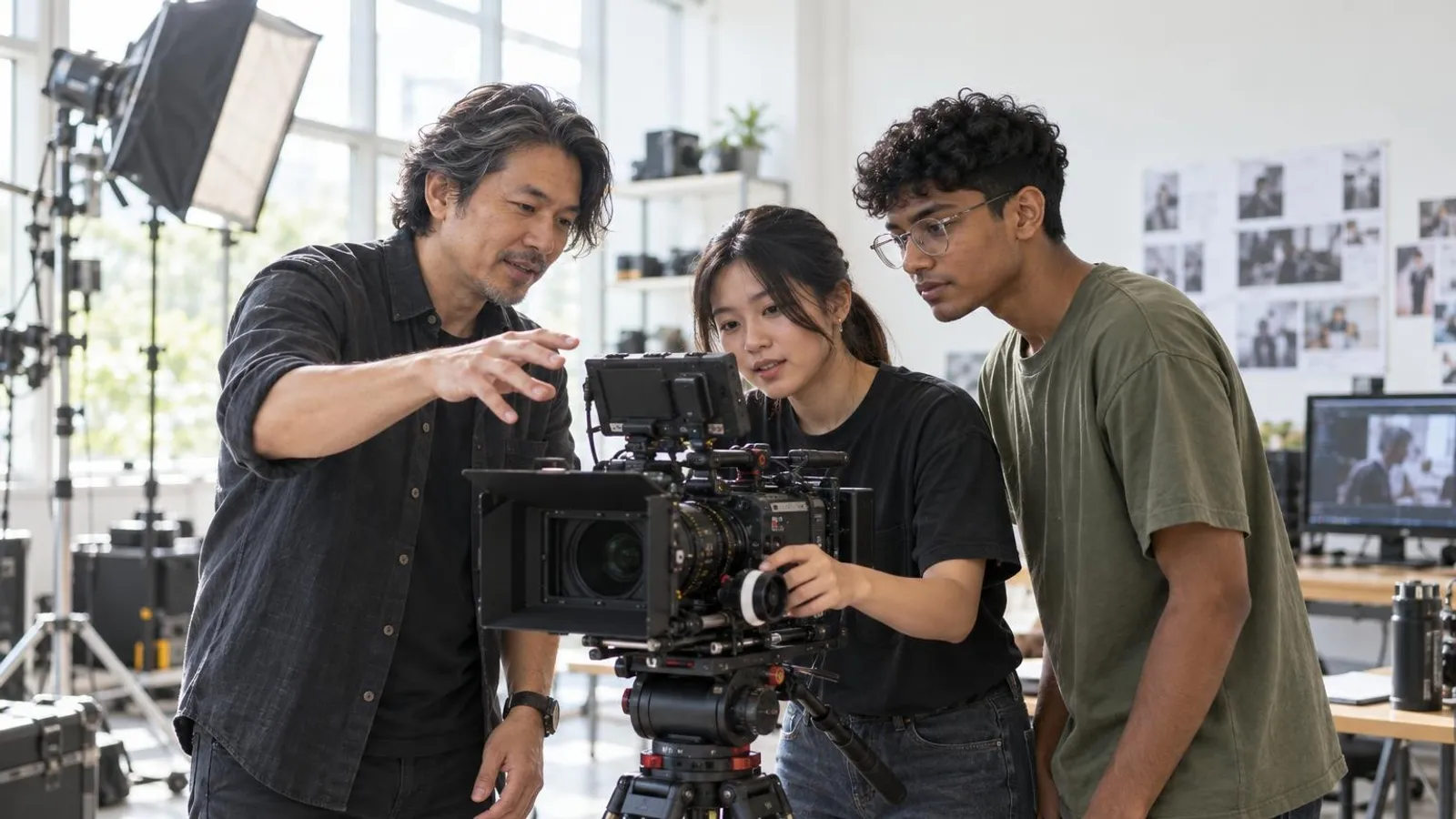 AI image by LocalRank
Filmmaking courses in Singapore range from a short evening workshop that ends with a screening to multi-year diplomas and degrees that cover directing, cinematography, sound and post-production. This list brings together seven providers that describe film production teaching on their own websites, drawn from arts charities, private training academies, polytechnics, the Institute of Technical Education and private colleges. Each entry says what the provider itself publishes about its programme and who it appears to suit. Fees, intakes and entry requirements change, so use the links to confirm current details. If you only want editing or photography rather than making a film, our video editing and photography course lists are better starting points.
1. Objectifs
Objectifs, an arts centre devoted to photography and film, runs a Digital Filmmaking workshop that its page pitches at beginners with no prerequisites. The page describes a hands-on route through a whole short film, covering storyboarding, scripting, directing, cinematography, sound and editing in Adobe Premiere Pro. Participants work in teams on narrative, documentary or experimental pieces, shoot on location and finish with a screening. Objectifs says a prosumer HD camera and audio equipment are lent out and that make-up lessons are not offered for missed sessions. The page lists seven sessions plus the screening and notes SkillsFuture Credit eligibility, but gives no fixed dates and asks people to email for the waitlist. Objectifs Junior separately lists film workshops for ages six to fourteen.
Bras Basah / Bugis
Visit website ↗EmailView on map ↗
2. Ngee Ann Polytechnic
Ngee Ann Polytechnic offers two routes. Its CET Academy lists a part-time Diploma in Filmmaking for adult learners, which the page says is compressed to 1.5 years. The modules include Directing & Performance, Scriptwriting Fundamentals, Cinematography & Lighting, Sound Recording & Design, Video Editing, Colour Grading and a team short-film capstone, plus a bootcamp-style Filmmaking Lab. Classes are on weekday evenings and alternate Saturdays, and the page says applicants with no formal film training are welcome, with stated entry requirements. For school leavers, the School of Film & Media Studies lists a full-time Diploma in Film, Sound & Video. The CET page mentions SkillsFuture Credit among payment routes; check intakes and eligibility with the polytechnic.
3. Equinet Academy
Equinet Academy is a private training academy whose media courses page lists in-person videography classes, two days or sixteen hours each. Titles include Advanced Cinematic Mirrorless/DSLR Videography & Video Production Techniques, Advanced Cinematic Smartphone Videography, and Mirrorless & DSLR Videography Essentials. The page describes the cinematic smartphone course as one to plan, direct and shoot cinematic video, and the essentials course as covering exposure, LOG capture, audio and stabilisation. It also lists longer certification pathways, including a Certified Digital Videographer programme of two modules and thirty-two hours. Equinet says SkillsFuture Credit is accepted on eligible courses. The emphasis is on camera craft for working creators and marketing teams, so it suits shorter, skills-first learning rather than a full film education.
Tanjong Pagar
Visit website ↗WhatsApp ↗EmailView on map ↗
4. LASALLE College of the Arts
LASALLE College of the Arts lists a three-year, full-time BA (Hons) Film aimed at people who want a degree-level grounding in screen storytelling. Its programme page says students gain competency across seven disciplines: screenwriting, producing, directing, cinematography, sound, post-production and production design. The first two years combine film practice with critical film studies, and the final year includes a dissertation and a graduation project. Teaching takes place across the McNally and Winstedt campuses. LASALLE states there is one intake a year in August and that applicants submit a portfolio with a one-page synopsis of a short story for the screen, followed by an online interview for those shortlisted. The page gives dates for the August 2027 intake, so check them with admissions.
Bugis / McNally Street
Visit website ↗EmailView on map ↗
5. Temasek Polytechnic
Temasek Polytechnic's School of Design lists a Diploma in Digital Film & Television as a polytechnic route into screen production. The course page organises its subjects across three years and names screenwriting, directing, cinematography, sound, editing and production design among them. Subject titles shown include Introduction to Directing, Directing, Cinematography, Camera in Motion, Audio Post, Video Editing and Advanced Editing, with a final-year project group at the end. The page gives a planned 2026 intake figure and the 2026 Joint Admissions Exercise aggregate range, and the School of Design is based on the polytechnic's Tampines campus. Anyone considering it should read the entry rules and how admission works on the official course page.
Tampines
Visit website ↗View on map ↗
6. ITE College Central
ITE College Central teaches a Higher Nitec in Film & Video Production, which the Institute of Technical Education lists as a full-time course of 24 months. ITE's page describes the content as storytelling evaluation, pre-production, camera operation and assisting, camera movement, lighting setups, multi-camera production, sound recording and post-production. It positions the course as hands-on, with projects on current technology and an internship, and says graduates typically find work with film and television production companies on dramas, movies and advertising. Roles it names include camera operator, focus puller and production assistant. This is a skills-based, technical route rather than a degree. Entry rules and admission exercises differ between the course versions ITE lists, so check the current entry requirements before applying.
Ang Mo Kio
Visit website ↗View on map ↗
7. Management Development Institute of Singapore (MDIS)
MDIS lists a Bachelor of Arts (Honours) Film and Television Production on its media and communications pages, awarded by the UK's Teesside University. The page describes it as a top-up degree available full time and part time, MDIS's landing page says students get hands-on experience from cinematography to production, with scope to direct feature films, produce documentaries and create television content, and mentions learning from industry experts and building a professional network. The pages do not state intake dates, so confirm timing, entry requirements, study mode and the programme's current status directly with the institute. As a top-up, it points to applicants with earlier study, so ask MDIS what prior qualifications it expects.
Queenstown / Stirling Road
Visit website ↗View on map ↗
How to choose
- Decide whether you want to try filmmaking or train for a career. A short workshop or videography class suits curiosity and a first project, while a diploma or degree builds a portfolio over years. Read each provider's page for the stated length, format and who the course is aimed at before comparing.
- Check what is actually taught. Directing, cinematography, sound and editing are often listed together, but the depth differs. Look at the module or subject titles on the provider's page and see whether you will shoot and finish a film yourself or mainly study film theory and history.
- Look at entry requirements and intake timing early. Polytechnic, institute and degree programmes publish qualifications, portfolio or interview steps and fixed intake windows, while workshops may run on a waitlist. Confirm the current dates, requirements and any funding such as SkillsFuture Credit directly with the provider.
- Ask what equipment and facilities you will use. Some providers say they lend cameras and audio gear, run studios or give editing access, while others expect you to bring your own. Find out the camera types covered, whether you work in teams, and how much hands-on shooting time you get.
- Match the credential to your goal. A workshop certificate, a Higher Nitec, a diploma and a degree carry different weight, and wording such as awarding body or accreditation should be taken from the provider's own statement. Ask the school what the programme leads to and where graduates are said to go.
. No changes recorded since.
Founder and Editor
Amir Wahab is the founder and editor of LocalRank, an independent Singapore rankings and local guides publication.
Read next

6 Best Motorcycle Rental Companies in Singapore (2026)
Compare 6 motorcycle and scooter rental companies in Singapore, from Class 2B hire to long-term leasing, with what each says it offers and how to enquire.
By Amir Wahab5 min read

7 Best Invisible Grille and Safety Netting Installers in Singapore (2026)
Compare 7 invisible grille, cat mesh and safety netting installers in Singapore for HDB, condo and landed homes, with what each company says it offers.
By Amir Wahab5 min read

7 Best Roller Shutter and Industrial Door Suppliers in Singapore (2026)
Seven roller shutter and industrial door suppliers in Singapore, from shopfront and fire-rated shutters to high-speed and sectional doors, plus tips.
By Amir Wahab5 min read

6 Best Car Upholstery and Seat Cover Specialists in Singapore (2026)
Six Singapore workshops for car leather seats, re-trimming, roof lining and interior trim, with what each says it offers and how to choose well.
By Amir Wahab5 min read