7 Best Elderly Meal Delivery Services in Singapore (2026)
Compare 7 elderly meal delivery services in Singapore, from soft and pureed meals to tingkat and Meals-on-Wheels, and how each takes orders or referrals.
- Edited by
- Amir Wahab
- Published
- Reading time
- 5 min read
 AI image by LocalRank
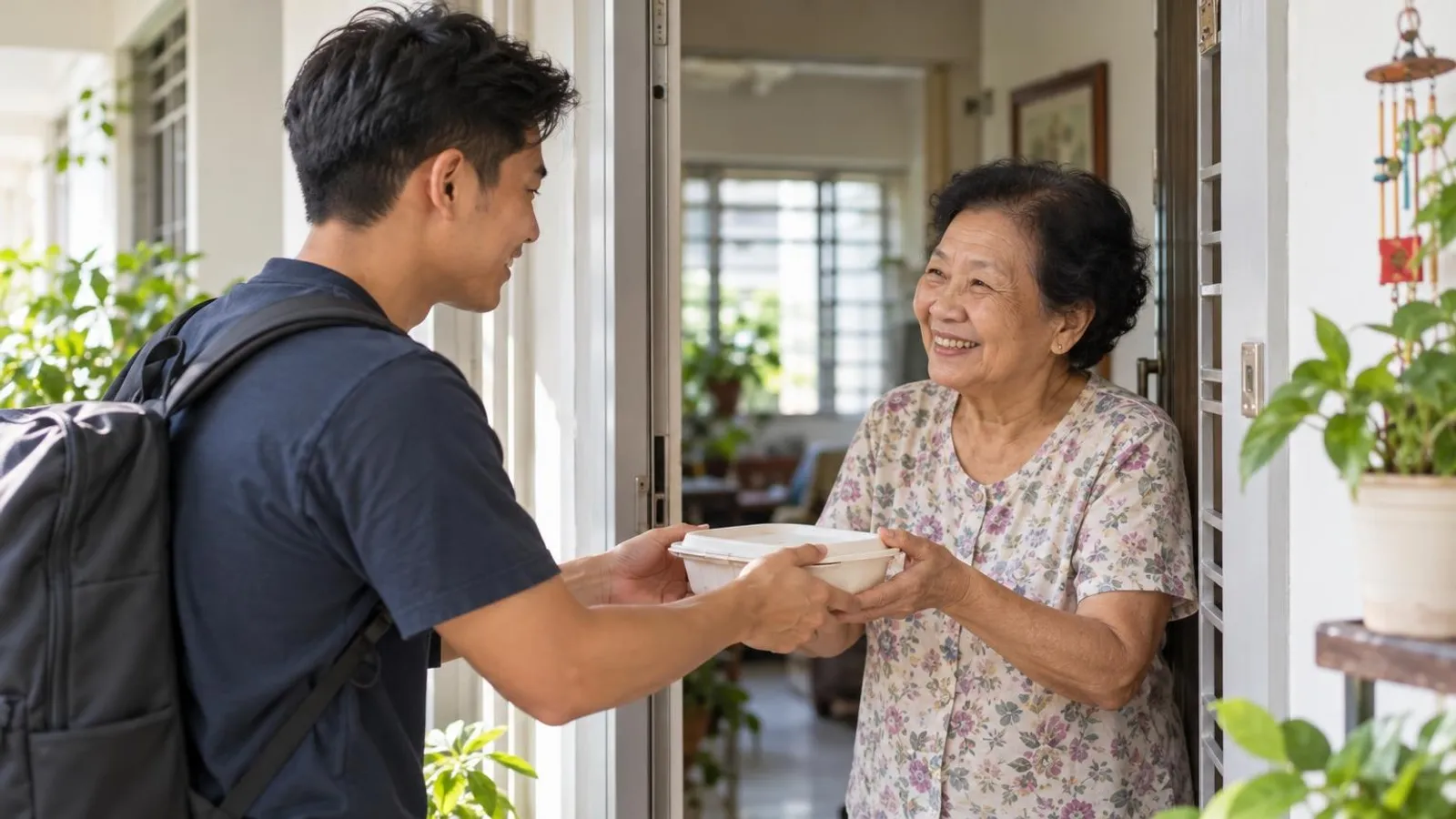
Arranging regular meals for an older parent in Singapore means sorting out three quite different kinds of service: subsidised delivery arranged through referral, tingkat caterers that cook for ordinary households, and specialist brands that grade food texture for people who struggle to swallow. This page lists seven providers across those groups, drawn from each provider's own pages and described only as they describe themselves. We list no prices, and nothing here is medical advice. Before ordering, find out the texture or diet your parent's doctor, dietitian or speech therapist recommends, then check each provider's delivery area, ordering route and what it says it can and cannot adjust.
1. GentleFoods
GentleFoods is the consumer brand of The Gentle Group, a Singapore company that, according to its site, specialises in meals for people with swallowing difficulties. Its online shop sorts products by IDDSI texture level, from level 3 liquidised and level 4 puréed through level 5 minced and moist to level 6 soft and bite-sized, across chicken, fish, noodle and rice meals plus soups, porridge, breakfasts and snacks. Orders go through an online cart, with delivery listed Monday to Saturday and a self-collection point on Admiralty Street; the site also says frozen items can take several working days to fulfil. It names hospital pharmacies as further stockists. Because its textures are graded, it suits families who already have a level recommended by a clinician.
Admiralty
Visit website ↗View on map ↗
2. TOUCH Meals-On-Wheels
TOUCH Community Services runs Meals-On-Wheels for homebound seniors who cannot buy or prepare their own food or who have little caregiver support, according to its page. Service is limited to listed towns in the west and centre, including Ang Mo Kio, Bishan, Toa Payoh, Jurong and Choa Chu Kang. TOUCH says meals can suit vegetarians and seniors on porridge, soft or blended diets, and that staff contact applicants to agree meal choices and delivery frequency, including weekends. Charges are advised after an assessment, with possible subsidies. Applications can come through a hospital or polyclinic doctor, the Agency for Integrated Care or an AIC Link, and the page also lists a caregivers line for questions. It is a referral-style service, not an instant online order.
Toa Payoh, Ang Mo Kio and Jurong service zones
Visit website ↗EmailView on map ↗
3. AIC Meals on Wheels
The Agency for Integrated Care describes Meals on Wheels as a service for frail clients who cannot go out to buy or prepare meals and have no caregiver to do so. Its page says lunch and dinner are delivered seven days a week across the island, including public holidays, with halal, non-halal, vegetarian and special diets such as blended or soft food. It states that subsidies depend on citizenship or PR status and a means test. To apply, the page points to a doctor at the senior's hospital or polyclinic, who can submit the application online, or to an AIC Link; a hotline and enquiry email are published. It also offers a provider-search map, useful for seeing which care providers serve a given address.
Islandwide, via referral
Visit website ↗View on map ↗
4. YWCA Meals-On-Wheels
YWCA of Singapore says its Meals-On-Wheels programme has run since 1997 and serves seniors aged 60 and above who are frail, needy or homebound, alongside low-income children and persons with disabilities. Its page names the Outram area along the west-bound MRT line, covering places such as Chinatown, Tiong Bahru, Redhill and Queenstown, so it is a neighbourhood programme rather than an islandwide one. The site lists citizenship and household-income criteria and explains that a social worker from a family or social service centre applies on the senior's behalf, then liaises with the programme team about documents. A programme phone line is published for questions. It is a charity referral route, not a commercial subscription.
Outram, Tiong Bahru and Queenstown
Visit website ↗View on map ↗
5. Gourmetz SilverSpoon
Gourmetz presents itself as a caterer for preschools, student care centres, workplaces and eldercare facilities. Its eldercare page describes daily fulfilment and on-demand meals for eldercare centres, including residents who need special textures. The page also introduces SilverSpoon, which it calls a premium tingkat service designed for older people: each daily meal has one meat, one vegetable, one side and soup, with four texture choices named Regular, Soft Bite, Minced & Moist and Pureed. The site's main audience appears to be facilities, so households should use the company's WhatsApp link to ask whether SilverSpoon can be delivered to a home address, which areas are covered, and how texture choices are set for each subscriber.
Singapore
Visit website ↗View on map ↗
6. JCatering
JCatering is a tingkat service whose guide for elderly parents says meals are made without added MSG, with lower-sodium salt and a healthier-choice oil. The page describes a five-day trial with no auto-renewal, longer plans, delivery to a parent's own address within its zones, and a subscription pause of up to a month for hospital stays. It is candid that the menu is fixed and that texture changes cannot be guaranteed, and it says meals are not medically formulated, so families with chewing or swallowing concerns are asked to message first to check suitability. Delivery is on weekdays, and the FAQ states the kitchen is not halal-certified, which matters for some households.
Islandwide delivery
Visit website ↗WhatsApp ↗View on map ↗
7. Dabba Junction
Dabba Junction is an Indian tiffin service, and one of its blog posts is written for seniors and their families. The post describes lighter home-style cooking with minimal oil, no preservatives or artificial colours, and well-cooked vegetables with soft grains, delivered contactlessly across the island with the dabba left at a secure spot. It lists Flexi, Monthly and other plan types, ordering through an app or web portal with a cut-off the evening before, and says it does not cater to specific medical dietary requirements. That clarity helps families decide quickly: this is a flavour-forward option for seniors who prefer Indian food, not a service for therapeutic or texture-graded diets, so ask first if chewing is a worry.
Jalan Besar and Little India
Visit website ↗WhatsApp ↗EmailView on map ↗
How to choose
- Start with the texture or diet. Ask the doctor, dietitian or speech therapist what the person can manage, then compare that with how each provider describes its range. Graded brands name their levels, while tingkat caterers usually run a fixed menu. Treat the word "soft" cautiously, because providers use it loosely and it is not a medical term.
- Match the service to the situation. Charity and AIC schemes are described as being for frail, homebound seniors and run on referrals and assessments, while tingkat caterers and shop-based brands accept ordinary households. Read the eligibility wording on each page, including citizenship, location and caregiver-support conditions, before expecting a start date.
- Check where and when it delivers. Delivery zones, weekday-only schedules, collection points and frozen-fulfilment times differ widely between providers. Ask about the exact postcode, whether someone has to receive the food, and what happens if nobody is home, especially for seniors living alone or in a condominium with a guardhouse.
- Ask about changes and pauses. Hospital stays, travel or a change in appetite can interrupt a subscription. Find out how far ahead orders must be changed or cancelled, whether a short trial is offered, and whether the provider allows pauses, before committing to a long plan for a parent who may need to change course.
- Ask for dietary details in writing. If salt, oil, halal status or allergens matter, request the provider's own statement and ask whether kitchens share equipment. Treat wording such as "less oil" or "lighter" as the provider's description, and confirm anything medical with a clinician rather than relying on a menu page or a blog post.
. No changes recorded since.
Founder and Editor
Amir Wahab is the founder and editor of LocalRank, an independent Singapore rankings and local guides publication.
Read next

6 Best Motorcycle Rental Companies in Singapore (2026)
Compare 6 motorcycle and scooter rental companies in Singapore, from Class 2B hire to long-term leasing, with what each says it offers and how to enquire.
By Amir Wahab5 min read

7 Best Invisible Grille and Safety Netting Installers in Singapore (2026)
Compare 7 invisible grille, cat mesh and safety netting installers in Singapore for HDB, condo and landed homes, with what each company says it offers.
By Amir Wahab5 min read
7 Best Roller Shutter and Industrial Door Suppliers in Singapore (2026)
Seven roller shutter and industrial door suppliers in Singapore, from shopfront and fire-rated shutters to high-speed and sectional doors, plus tips.
By Amir Wahab5 min read

6 Best Car Upholstery and Seat Cover Specialists in Singapore (2026)
Six Singapore workshops for car leather seats, re-trimming, roof lining and interior trim, with what each says it offers and how to choose well.
By Amir Wahab5 min read