5 Best DJ Lessons in Singapore (2026)
Compare 5 Singapore DJ schools and studios: CDJ and controller training, turntablism, Ableton music production, private and group lessons for 2026.
- Edited by
- Amir Wahab
- Published
- Reading time
- 4 min read
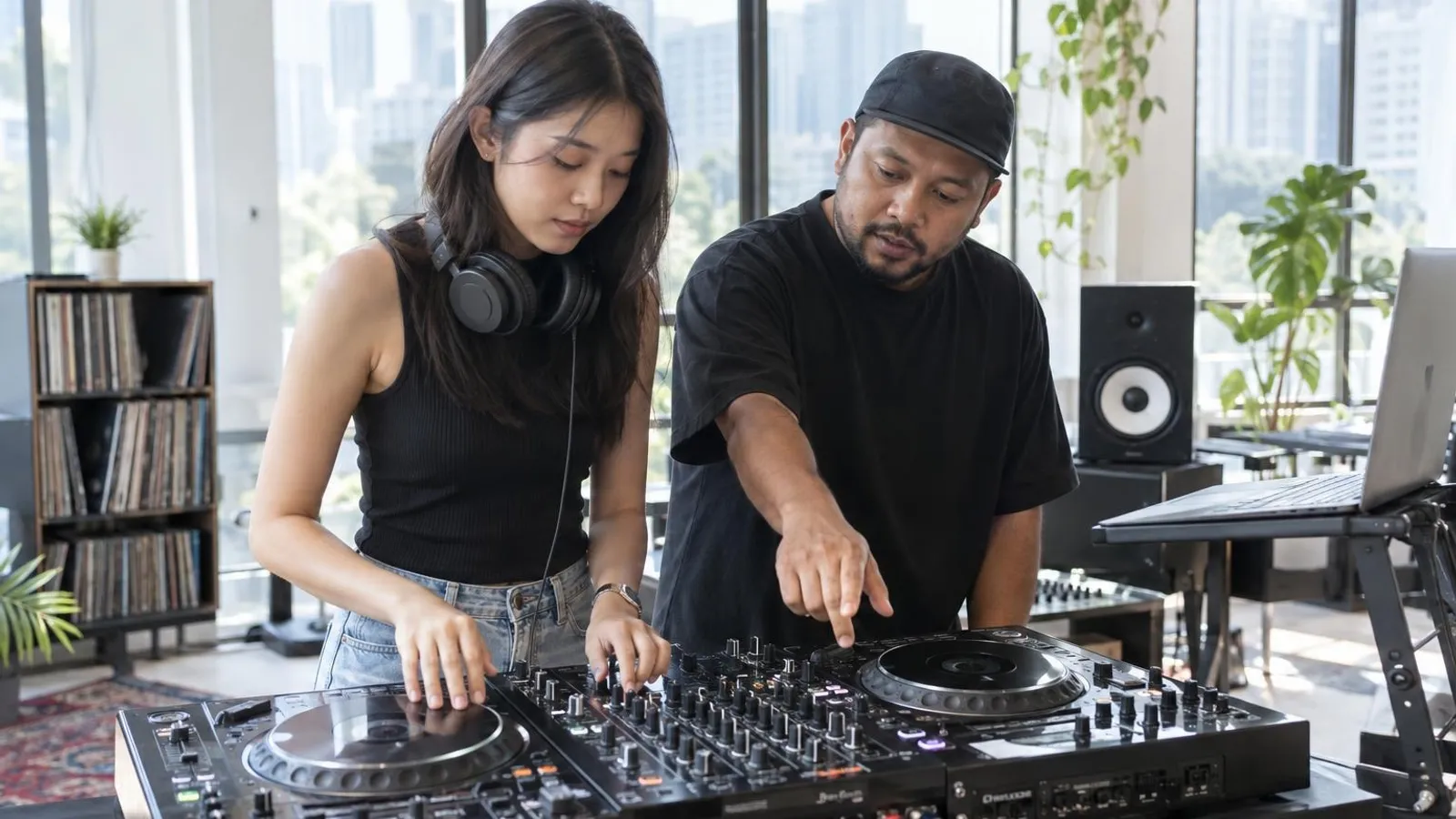 AI image by LocalRank
Learning to DJ in Singapore now means choosing between purpose-built DJ schools, a general music school with a DJ course, and workshops that fit around work. This list covers five places that publish their own course details, from beatmatching basics on club-standard CDJs to turntable scratching and Ableton production. Every description below comes from the provider's own website and is attributed to it. We leave out prices, because they change, so check each school's current page. Read how each one teaches, which gear it names, and whether lessons are private, group or workshop style, then message two or three before booking a trial.
1. Ministry of DJs
Ministry of DJs describes itself as a Beatport-certified pro DJ school, and its site names CDJ-3000X and DJM-A9 equipment for training. Its published course menu runs from a basic DJ course (beatmatching, tempo and pitch, Rekordbox DJ or Serato DJ Pro, recording your own mix) through intermediate and advanced levels, plus separate turntablism and Ableton Live music production programmes. Lessons can be taken individually or in groups of two, and the school says everything is by appointment only, booked through WhatsApp. Its menu also lists studio rental, student mixes and corporate events. The studio is at Claymore Plaza, in the Orchard area, and the site publishes an email address as well as WhatsApp for enquiries.
Claymore, near Orchard
Visit website ↗EmailView on map ↗
2. POP Studio Academy
POP Studio Academy says it began in 2002 as a vinyl shop with a DJ jamming studio and now concentrates on teaching. Its site lists an intro to DJ mixing, basic and advanced DJ mixing courses, and a separate production track covering Ableton Live, Logic Pro and more. The basic course outline mentions CDJ setup, Rekordbox and beatmatching, while the advanced outline refers to Serato, effects, open format sets and personal branding. The academy names a roster of working DJ and producer instructors, including Ableton Certified Trainer Ben Ang, and says it offers a blended approach for people balancing work or national service. Classes are held in an industrial building in the Joo Seng area, near Tai Seng.
Joo Seng, near Tai Seng
Visit website ↗EmailView on map ↗
3. TINC Music DJ Academy
TINC Music runs a DJ academy from its studio at Ubi, alongside the studio rentals and music label that its site also features. The academy page sets out four steps: DJ Foundations for beginners, a tailor-made course shaped around individual goals, an advanced tailor-made course, and a mentorship option for advanced students. The foundations course, as the school describes it, covers music history, hardware and software, waveforms, cue and loop points, and EQ with bars and beats, using Rekordbox on a controller. Students bring their own laptop. The advanced course moves onto CDJ and mixer signal flow and live performance. Two studio rooms are also listed for hire, so you can keep practising afterwards.
4. ShowNing DJ Lab
ShowNing DJ Lab presents itself as a DJ school for complete beginners, with a Japanese and New York teaching influence it calls the Tokyo x New York method. Its site lists structured courses named Jr. School, Middle School, High School and Master School, plus holiday DJ programmes, practice sessions and an in-studio trial lesson. Lessons are offered as one-to-one or group sessions. The school introduces its lead teacher, DJ toMW, as a DMC competition finalist and says its students have placed in local DJ contests, which may suit younger learners interested in battle formats. It says it is endorsed by Audio-Technica for headphones, and lists a North Bridge Road studio near Bugis; WhatsApp support is posted for enquiries.
5. Biz IQ Academy (Hustle)
Biz IQ Academy, which trades alongside Hustle, offers a compact DJ workshop for people who want a short course rather than weekly lessons. Its page describes a two-day, 16-hour programme with weekday, weekend and evening intakes at its Somerset and Redhill training centres. The syllabus, as published, covers sound perception, beat matching, harmonic mixing, audio levelling, the Camelot Wheel for key matching, playlist building, and an introduction to music licensing and promoting mixes on platforms such as SoundCloud and TikTok. Practice uses DJ controllers, studio monitors and mixing software. The academy says completers receive a certificate, and states that the module is eligible for SkillsFuture funding, so ask how that applies to you.
Somerset & Redhill
Visit website ↗View on map ↗
How to choose
- Start with the gear named on the school's own page. If you plan to play clubs or bars, lessons on club-standard CDJs and a mixer will transfer directly, while a controller course suits home practice. Ask which equipment you will actually use in your first session, and whether you must bring a laptop.
- Decide whether you want DJing, production or both. DJ schools usually teach mixing, beatmatching and set building, while production courses cover software such as Ableton Live and Logic Pro. Several schools here offer both, so check whether the modules are sold separately or as a bundle before committing.
- Compare lesson formats, not just topics. Private lessons let the teacher adjust the pace, small groups bring a shared cost and company, and short workshops compress learning into a weekend. Ask how many lessons the course contains, how long each runs, and whether missed sessions can be rescheduled.
- Read the instructor profiles on each website. Look for teachers who actually perform or compete, and ask how they teach beginners rather than only advanced players. A trial lesson, where offered, is the quickest way to judge whether the teaching style and studio environment suit you.
- Check practice access and the booking route. Some schools rent out studio time, which helps if you do not own decks. Also confirm the current schedule, since some courses are by appointment only. If funding such as SkillsFuture is mentioned, ask the provider to explain eligibility in writing.
. No changes recorded since.
Founder and Editor
Amir Wahab is the founder and editor of LocalRank, an independent Singapore rankings and local guides publication.
Read next
7 Best Chinese Instrument Lessons in Singapore (2026)
Seven places to learn guzheng, erhu, pipa and dizi in Singapore, from specialist studios to NAFA and NTU programmes, with how to choose between them.
By Amir Wahab5 min read
7 Best Flute and Saxophone Lessons in Singapore (2026)
Compare 7 flute and saxophone lesson providers in Singapore, from woodwind specialists to music schools offering clarinet and trumpet classes.
By Amir Wahab5 min read
9 Best Ukulele Lessons in Singapore (2026)
Nine Singapore schools and studios that list ukulele lessons, from a dedicated ukulele shop to large music schools, with formats, ages and how to choose.
By Amir Wahab6 min read
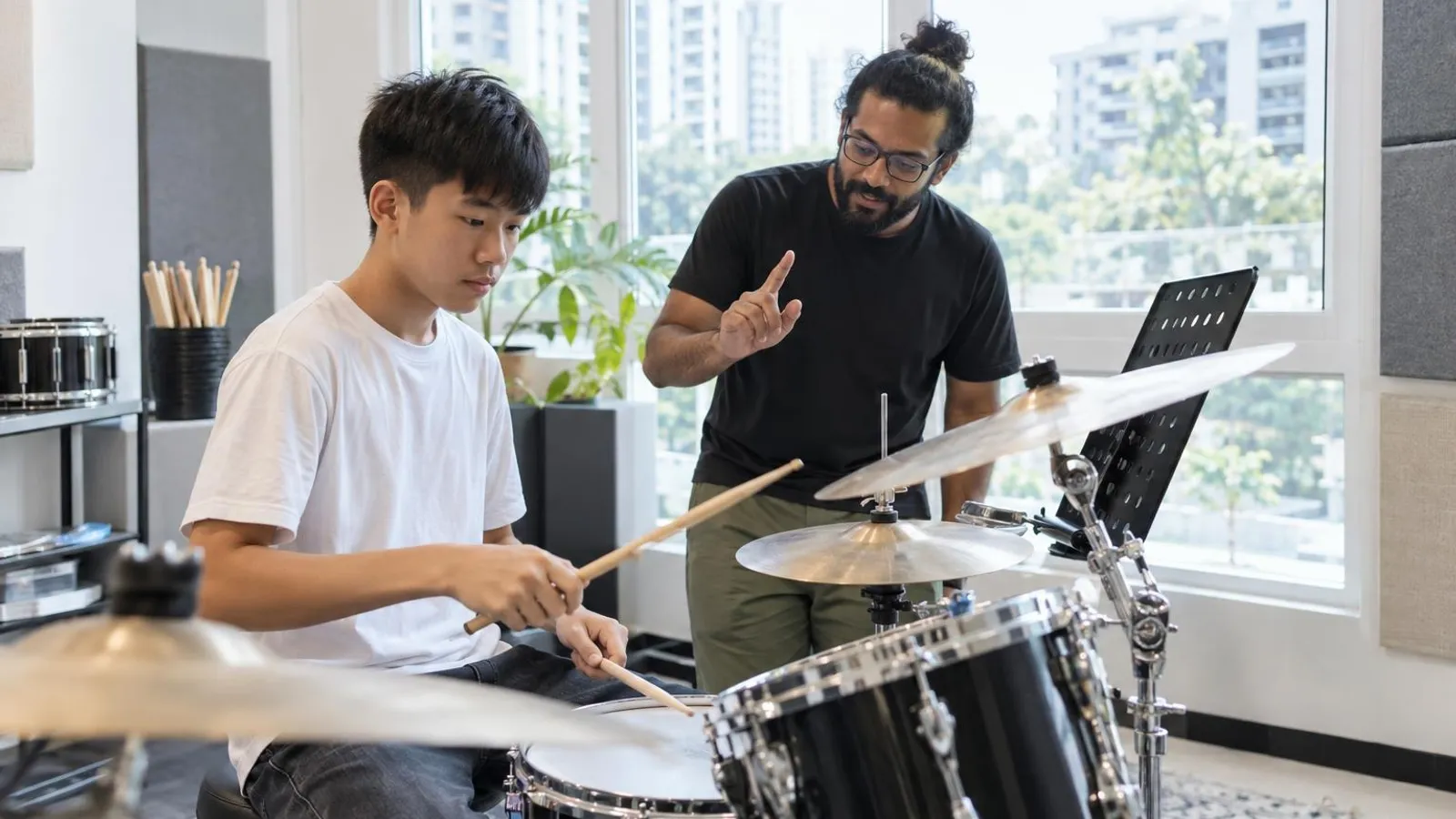
8 Best Drum Lessons in Singapore (2026)
Compare 8 drum lesson providers in Singapore for kids, teens and adults, from drum-only schools to studios and Chinese percussion, all checked.
By Amir Wahab6 min read