7 Best Chinese Instrument Lessons in Singapore (2026)
Seven places to learn guzheng, erhu, pipa and dizi in Singapore, from specialist studios to NAFA and NTU programmes, with how to choose between them.
- Edited by
- Amir Wahab
- Published
- Reading time
- 5 min read
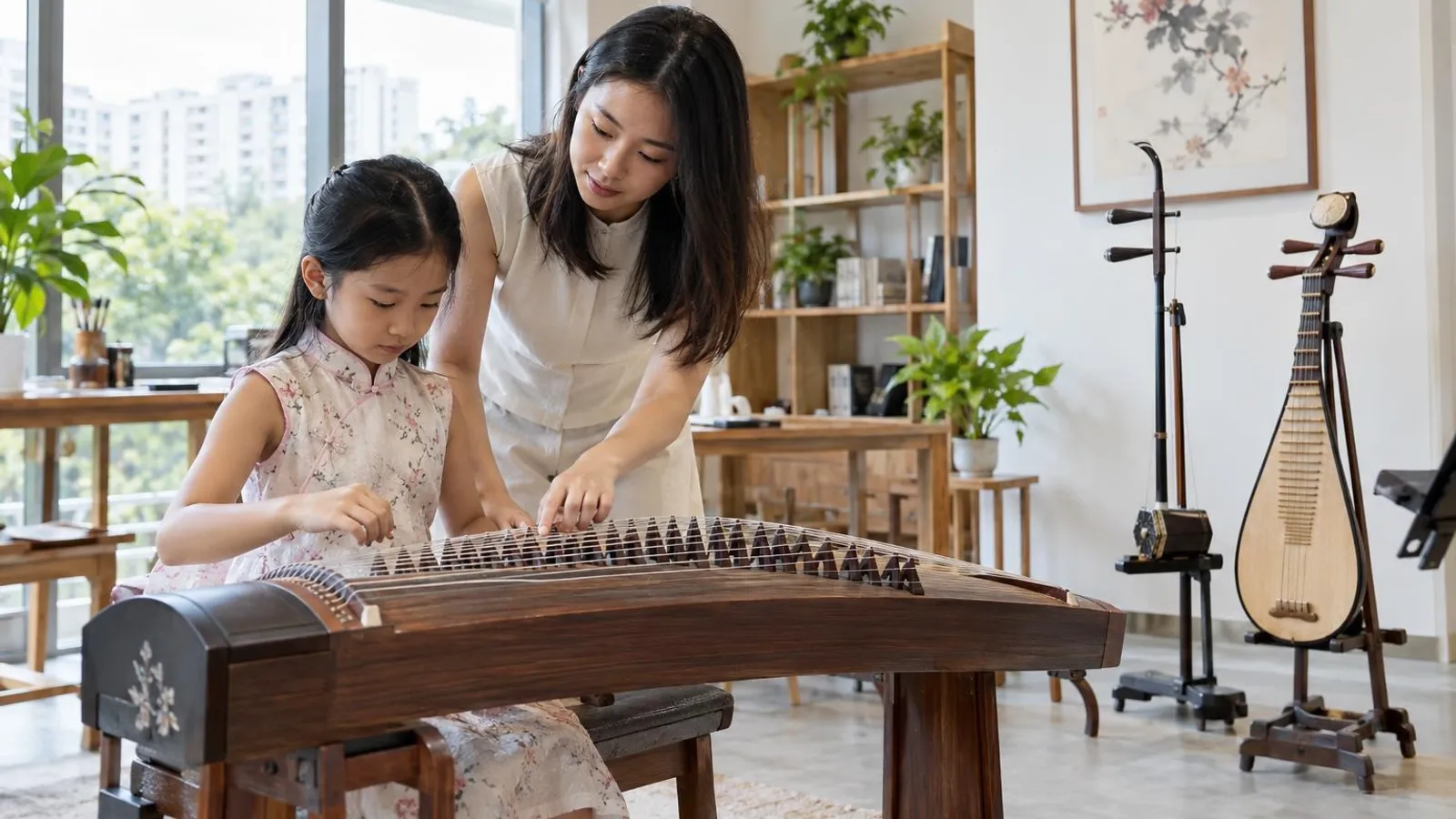 AI image by LocalRank
Chinese instrument lessons in Singapore range from specialist studios teaching guzheng, erhu, pipa and dizi one-to-one to arts-institution programmes with auditions and graded syllabuses. This guide looks at seven providers whose own sites publish a lesson or course route, and describes what each says it offers rather than judging teaching quality. Use it to match the instrument, age group and format you want, whether that is a private teacher, a small group or a structured pathway toward grading examinations. It is distinct from our general music school guides, which focus on Western instruments. Fees, trial terms and intakes change, so confirm those directly with the provider before committing.
1. Eason Music School
Eason Music School describes itself as a Chinese music school trading since 1978, and it is the broadest single-roof option on this list. Its site lists guzheng, erhu, dizi and pipa alongside yangqin, zhongruan, guqin, hulusi, suona, sheng and Chinese percussion. Private lessons are offered face to face, at the studio, at a teacher's location or at the student's home, and online for several instruments. Group classes are described for guzheng, erhu and parent-and-child learners, and the school also lists a short crash course for newcomers. Teachers are presented on its instructors page, organised by instrument. Its pages say lessons can follow either the TENG–Confucius Institute at NTU or the NAFA grading syllabus, as the student prefers. Check its site for current group intakes.
Kallang (CT Hub)
Visit website ↗WhatsApp ↗View on map ↗
2. Eight Tones Music School
Eight Tones Music School calls itself a specialist Chinese music school, and its site lists dizi, erhu, guzheng, guqin, pipa, zhongruan, liuqin, hulusi, sheng and yangqin. It describes one-to-one lessons as its recommended format, with small groups also possible, and says adult group classes run for erhu, guzheng and dizi. Online lessons are listed for several instruments, and children's and early-childhood programmes appear on the site. The school says its teachers come from local Chinese orchestra backgrounds and that students may request a change of teacher. It also describes preparation for TENG Academy, NAFA and Central Conservatory grading examinations. Its site shows an Erhu Masterclass and annual student concert for 2026, which indicates recent activity. Trial lessons are mentioned, so ask about terms.
Bugis (North Bridge Road)
Visit website ↗WhatsApp ↗EmailView on map ↗
3. NAFA Junior Music: Chinese Instruments Programme
NAFA, the Nanyang Academy of Fine Arts, runs a Chinese Instruments Programme within its junior music offering for children. Its page lists dizi, erhu, guzheng, pipa and yangqin, and sets out stages from Preparatory through Grades 1 to 9 and a Diploma level, with age bands. According to NAFA, practical lessons are one-to-one while theory is taught in groups, masterclasses are scheduled each semester, and lessons take place once a weekend across two semesters a year. New applicants must audition, and the page says an audition does not guarantee a place. It gives October and May enrolment windows. This suits families wanting a structured, graded pathway from an arts institution rather than casual hobby lessons. Adults should look elsewhere on this list.
Bras Basah / Bencoolen
Visit website ↗View on map ↗
4. Asia Music School
Asia Music School is a multi-instrument school whose homepage lists guzheng and erhu among its subjects, next to piano, keyboard, violin, drums, guitar, ukulele, vocals, flute and cello. That makes it a convenient pick for families who want Chinese and Western instruments taught by one school, perhaps for siblings with different interests. The school says it was established in 2008, offers individual and group courses for children and adults, and prepares students for examinations; its footer states a Ministry of Education registration number, which is the school's own statement. Its site lists branches including West Coast, Yishun, Hougang and Bugis, but does not say which branch teaches which instrument, so confirm guzheng or erhu availability with the school before visiting.
West Coast, Yishun, Hougang and Bugis
Visit website ↗WhatsApp ↗EmailView on map ↗
5. Ejoy Music Center
Ejoy Music Center is a Parkway Parade studio whose site focuses on plucked-string Chinese instruments. It lists ruan, guzheng and liuqin, and offers individual lessons and group lessons through separate pages, plus ABRSM music theory courses. The site invites visitors to book a free trial lesson, and its contact page lists four teachers by name, although it does not say which instrument each teaches. It also carries a 2026 copyright line, so it appears to be actively maintained. Its opening hours are published on its site, with weekday afternoons and evenings and fuller weekend days. This is a sensible option for east-side learners who want guzheng in a small mall studio, but erhu, pipa and dizi are not listed there, so look elsewhere for those.
Marine Parade (Parkway Parade)
Visit website ↗View on map ↗
6. Artstratosphere Music School
Artstratosphere Music School is a guzheng-focused studio on Serangoon Road. Its site presents a Children's Foundation Course for ages 5 to 12, an Adult Healing and Self-Cultivation Course described as needing no experience, and a Pop Guzheng course aimed at beginners. The school says its teachers teach bilingually in Mandarin and English and that trial lessons can be booked. It also mentions performance opportunities for students, and its team section describes teaching and competition credentials, the school's own statements. The school further states it registered with the Ministry of Education in 2004. Only guzheng is described, so erhu, pipa or dizi learners should look elsewhere. Its footer reads 2024, but dated uploads on the site point to 2025 activity, so confirm current class availability.
Serangoon Road
Visit website ↗View on map ↗
7. Confucius Institute at NTU (Dizi and Guzheng Courses)
The Confucius Institute at Nanyang Technological University lists Chinese instrument courses within its cultural programmes. Its site shows a Basic Dizi series across several levels, with Level 3 listed for March to April 2026 on Tuesday evenings. Classes are described as taught in Mandarin and English, using Teng Academy grade-level pieces, and a D-key flute is required. The programmes page also lists a Guzheng Beginner Course, though it was not dated for this year when we checked. Courses are held at its one-north campus near Buona Vista, and enquiries go through the phone, WhatsApp and email on its pages. Short, term-based classes like these suit adults who want a defined course rather than open-ended private lessons. Ask the institute which levels are open next.
one-north / Buona Vista
Visit website ↗WhatsApp ↗View on map ↗
How to choose
- Start with the instrument. Specialist Chinese music schools list erhu, guzheng, pipa and dizi together, while some studios cover only one or two. Check the provider's own course pages for your exact instrument and ask whether a qualified teacher is currently available for it before booking a trial.
- Decide between one-to-one lessons and a group class. Providers here describe both, and group formats suit social learners but move at a shared pace. Ask how many students share a class, whether groups must be formed by learners themselves, and whether classes run weekly.
- Think about exams and pathways. Several schools say lessons can follow the TENG Academy or NAFA grading syllabuses, while NAFA's junior programme builds in grades and an audition. If graded progress or Direct School Admission is a goal, ask which syllabus the teacher uses.
- Consider the learner's age. Some providers here are aimed at children, such as NAFA's junior stages or a studio's foundation course, while others describe adult classes or short courses. Confirm minimum ages, whether beginners with no music background are welcome, and whether parents may sit in.
- Ask practical questions about the instrument and logistics. Many beginners do not own a guzheng or erhu, so ask whether instruments can be borrowed or rented, how online lessons work, where classes meet, and how trial lessons, make-up sessions and billing work in practice.
. No changes recorded since.
Founder and Editor
Amir Wahab is the founder and editor of LocalRank, an independent Singapore rankings and local guides publication.
Read next
7 Best Flute and Saxophone Lessons in Singapore (2026)
Compare 7 flute and saxophone lesson providers in Singapore, from woodwind specialists to music schools offering clarinet and trumpet classes.
By Amir Wahab5 min read
9 Best Ukulele Lessons in Singapore (2026)
Nine Singapore schools and studios that list ukulele lessons, from a dedicated ukulele shop to large music schools, with formats, ages and how to choose.
By Amir Wahab6 min read
5 Best DJ Lessons in Singapore (2026)
Compare 5 Singapore DJ schools and studios: CDJ and controller training, turntablism, Ableton music production, private and group lessons for 2026.
By Amir Wahab4 min read
8 Best Drum Lessons in Singapore (2026)
Compare 8 drum lesson providers in Singapore for kids, teens and adults, from drum-only schools to studios and Chinese percussion, all checked.
By Amir Wahab6 min read