10 Best Confinement Food Delivery in Singapore
A guide to the best confinement food in Singapore, comparing 10 delivery caterers across Chinese, herbal, fusion and halal postnatal tingkat meals.
- Edited by
- Amir Wahab
- Published
- Reading time
- 4 min read
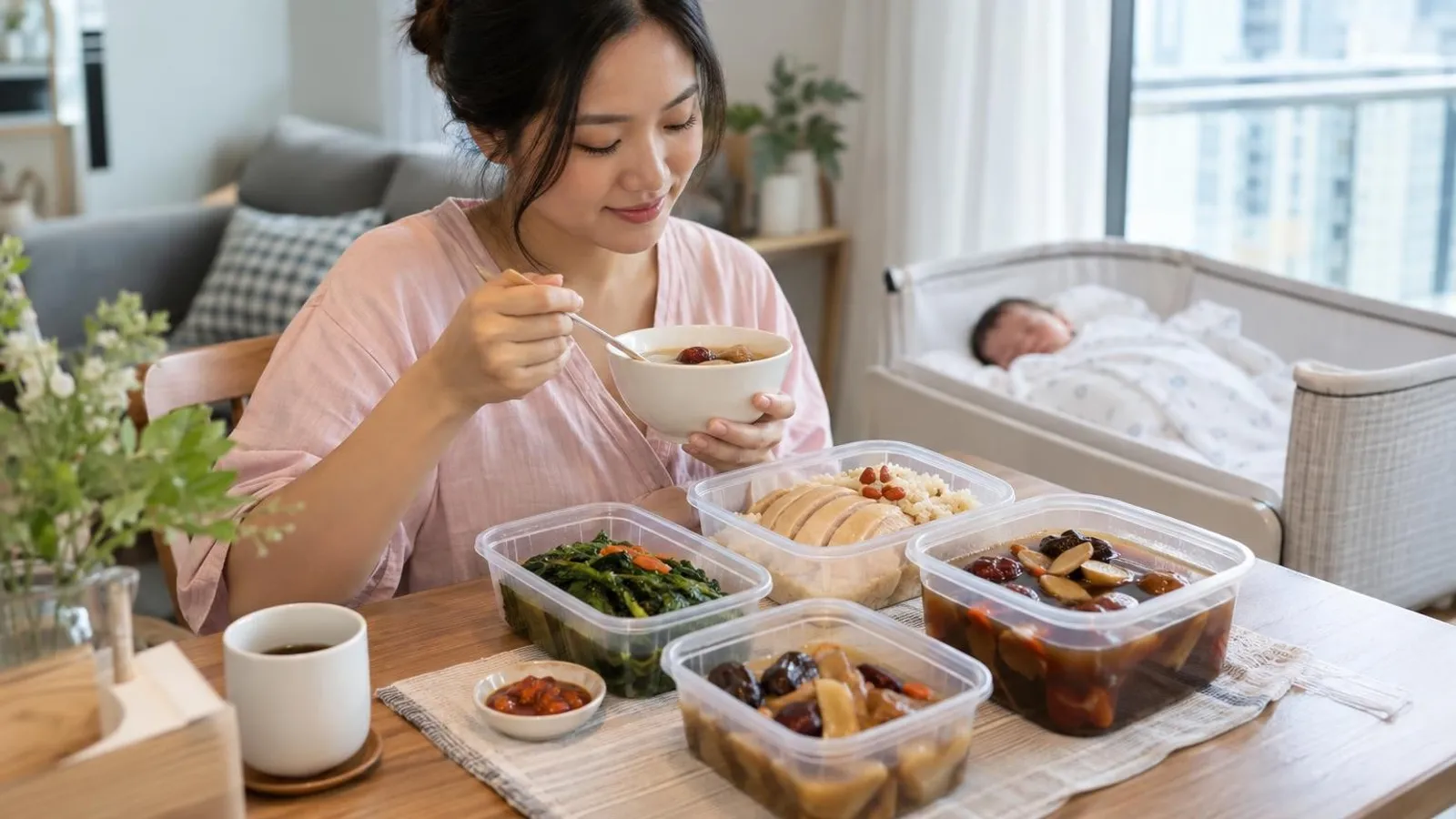 AI image by LocalRank
Confinement food in Singapore has grown into a busy delivery market, from hospital-backed kitchens and long-running Chinese caterers to Muslim-owned halal cooks working out of licensed home kitchens. Most deliver hot tingkat meals to your door once or twice a day across a 7 to 28-day plan. This guide gathers ten established, currently-operating providers, each checked against its own website or channel, so you can match a caterer to your cuisine, dietary and recovery needs.
1. Tian Wei Signature
Tian Wei Signature is a dedicated confinement food caterer offering both traditional Chinese and fusion meals, with double-boiled herbal soups built around ingredients such as ginseng and dang gui. The company says its menus are designed to aid recovery and support breastfeeding, and it runs packages from 7 up to 40 days with lunch, dinner or both. A trial meal is available before you commit to a full plan, and it says it cooks from an SFA-licensed kitchen.
2. Chilli Padi Confinement
Run by the Peranakan-focused Chilli Padi group, this arm has delivered confinement meals since 2011 after the dishes proved popular at its restaurant. Each set pairs a herbal soup with a protein, vegetables and rice plus a flask of red date tea, delivered hot in insulated, vacuum-sealed packaging with no reheating needed. The kitchen says its meals are meant to support postpartum recovery, and it offers a trial meal for mothers who want to sample the food first.
Islandwide
Visit website ↗WhatsApp ↗View on map ↗
3. Thomson Nutri
Thomson Nutri is the confinement meal delivery service of Thomson Medical Group, which bills it as the first such service run by a private hospital in Singapore. It says its recipes are developed in-house by its lactation consultants, Traditional Chinese Medicine physicians and dieticians, with soups double-boiled and dishes prepared without added salt or MSG. Meal plans cover the confinement period with lunch and dinner options delivered to the home.
Islandwide
Visit website ↗WhatsApp ↗View on map ↗
4. Yue Zi Le
Yue Zi Le is a confinement-meal-only caterer serving traditional Chinese dishes with an international twist, and it says it is one of the few in Singapore to let mothers customise their daily meat dish. Its menu is split into two phases, moving from lighter recovery dishes in the first weeks to strengthening and lactation-focused meals later, with a homemade confinement tea included. Orders placed before the evening cut-off are delivered the next day in single-use, wash-free containers.
5. NouRiche
NouRiche builds its confinement meals around traditional Chinese Medicine principles and highlights a signature Sheng Hua tonic among its herbal soups. The kitchen says its dishes use traditional ingredients and techniques intended to support circulation, energy and recovery, and it offers a vegetarian confinement plan alongside its regular menu. Shorter plans and single-day trial meals are available for mothers who want to try the food before booking a full package.
Islandwide
Visit website ↗WhatsApp ↗View on map ↗
6. Mama J's Confinement Food
Mama J's is a woman-owned confinement caterer cooking home-style meals rooted in Traditional Chinese Medicine, rotating its menu across a 28-day cycle so dishes rarely repeat. Meals arrive as a multi-tier tingkat with a separate flask of soup and a freshly brewed herbal tea, and the business also cooks fertility and pregnancy meals. Trial meals and ingredient customisation are offered, and it says it moved from a home kitchen to a central kitchen as it grew.
7. ReLacto
ReLacto, from the team behind Tian Wei Signature, focuses on lactation and recovery meals rather than standard confinement fare, and describes itself as Singapore's first dedicated lactation meal delivery. Its fusion and Chinese-style dishes are cooked without MSG and paired with a lactation drink in every meal, and it suggests starting a few weeks into confinement once a healthcare professional gives the go-ahead. It suits mothers who want meals aimed specifically at maintaining milk supply after the initial confinement weeks.
8. Ummu Fazwill
Ummu Fazwill is a halal confinement caterer that states it is 100% Muslim-owned and that all its meals are halal, cooked in an SFA-licensed kitchen. Its rotating menu blends Malay and Chinese halal dishes with mains, sides, desserts and freshly brewed drinks, and it says it delivers twice a day, at lunch and dinner, seven days a week. Ordering is handled over WhatsApp and meals are packed in thermal bags to arrive hot.
Islandwide
Visit website ↗WhatsApp ↗View on map ↗
9. Ukashah's Confinement Meals
Ukashah's Confinement Meals is a Muslim-owned halal caterer preparing postnatal tingkat from an SFA-licensed home kitchen. It stands out for a menu that reaches beyond the usual Malay confinement dishes into Western and Moroccan-influenced plates, and the business says its meals are cooked fresh for each delivery. As a small, home-based operation, its slots and daily menu are best confirmed directly with the caterer.
Islandwide
Visit website ↗WhatsApp ↗View on map ↗
10. Naddycooks
Naddycooks is a Muslim-owned halal confinement caterer whose tingkat menu features less-typical dishes such as pasta, nourishing sandwiches and soupy vegetable plates alongside home-baked desserts and more traditional fare. The home-based kitchen posts its rotating menu and takes enquiries through its Instagram page, and it says its meals are prepared to nourish new mothers through recovery. As a small operation it books up ahead of due dates, so availability is best checked directly.
Islandwide
Visit website ↗View on map ↗
How to choose
- Match the cuisine and dietary needs to the caterer: confirm halal status or vegetarian options directly with the kitchen, and check whether the style is traditional Chinese herbal, fusion or Malay confinement food.
- Order a trial meal where one is offered before committing to a 7, 14 or 28-day package, so you know the portion size, the taste and how well the food travels to your home.
- Check the day-to-day delivery details: how many meals arrive each day, the delivery windows, whether weekends and public holidays are covered, and whether packaging is reusable tingkat or single-use.
- Ask about customisation and food safety, such as whether you can swap dishes or adjust herbs (for example if the baby has jaundice), whether the kitchen is SFA-licensed, and how allergies are handled.
- Book early, because popular caterers and small home-based kitchens fill their slots weeks ahead of the due date, and check the cancellation or postponement policy in case the birth date shifts.
. No changes recorded since.
Founder and Editor
Amir Wahab is the founder and editor of LocalRank, an independent Singapore rankings and local guides publication.
Read next

10 Best Lactation Consultants in Singapore
A directory of 10 real, currently-operating lactation consultants in Singapore, from IBCLC home-visit specialists to hospital lactation clinics.
By Amir Wahab4 min read

10 Best Doulas in Singapore
Compare 10 real, currently-operating doulas in Singapore for antenatal, birth and postpartum support, each verified against its own website.
By Amir Wahab4 min read

Preschools in Singapore That Describe Their Programme as Montessori
84 centre entries carrying a Montessori signal in ECDA's register, set beside what each operator publishes about its own programme. A comparison of self-description: no authenticity score, no ranking, and no claim about what any classroom does.
By Amir Wahab22 min read

Infant Care in Singapore, Compared
Infant care costs roughly 1.9 times what nursery costs, and for most families the figure ECDA publishes is a regulatory cap rather than a price. 12 centre entries set against the cap, the subsidy table and the deposit — with the waiting-list question answered honestly, which is that no such figure is published.
By Amir Wahab25 min read