6 Best 3D Scanning Services in Singapore (2026)
Compare 6 3D scanning, reverse engineering and laser scanning providers in Singapore, from small parts and metrology to buildings, plants and sites.
- Edited by
- Amir Wahab
- Published
- Reading time
- 5 min read
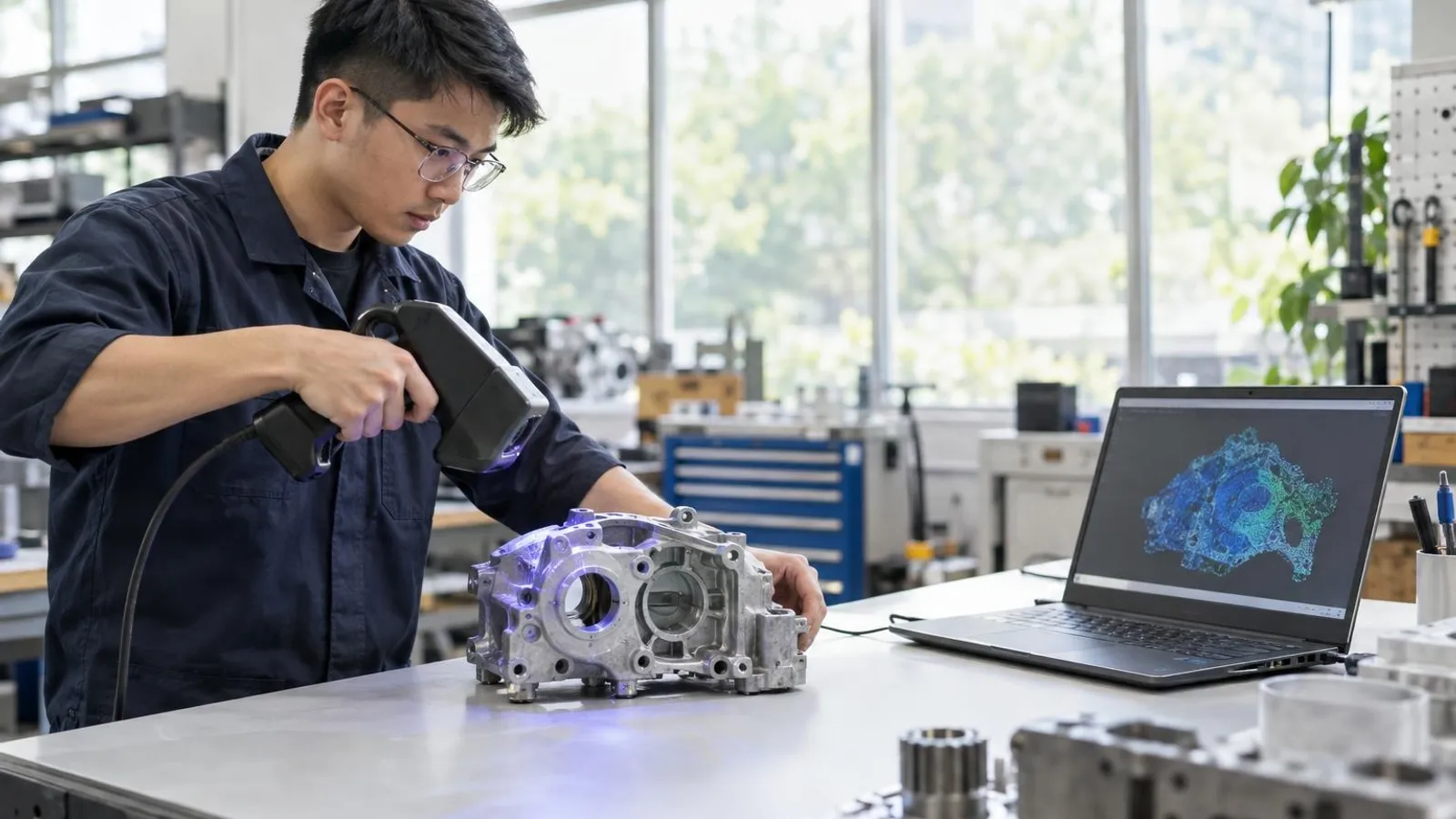 AI image by LocalRank
3D scanning in Singapore covers two quite different jobs. One is capturing a part, tool or product so it can be reverse engineered, inspected or reproduced. The other is laser scanning a room, plant or site so architects, engineers and facility teams get an as-built point cloud, drawings or a BIM model. This list brings together six providers across both, using what each publishes about its own services. Start by deciding whether your subject fits on a workbench or needs a scanner brought to the site, then check the file formats you need. If you want something printed afterwards, see our 3D printing guide, and our land surveyors guide covers boundary and engineering surveys.
1. Shonan Design (S) Pte Ltd
Shonan Design describes itself as a long-running supplier to Singapore industry, saying it has served since 1996. Its site lists 3D laser and structured-light scanners from brands including Artec and Solutionix, alongside design and metrology software such as Geomagic. The company says it digitises physical objects for design, replication and archival purposes, and offers scan-to-CAD so that a captured shape can be turned into an editable model. That mix suits engineers and product teams who need a mechanical part or a tooling surface recreated when no drawing survives. Because Shonan also deals in the equipment and software, it may suit buyers weighing outsourcing against building in-house capability. Ask which scanner suits your object and what files you will receive.
Ubi (Paya Ubi Industrial Park)
Visit website ↗View on map ↗
2. 3D Specialist
3D Specialist presents scanning as one of several advanced-manufacturing services, with a dedicated page for it. The page says it works with a professional-grade portable Peel 3D scanner, quotes volumetric accuracy of plus or minus 0.1mm, and covers reverse engineering, mesh finishing and conversion to CAD. It also says it can scan large or immovable objects on location, useful for machinery that cannot be moved. Files are listed in common formats including STL, OBJ, PLY, STEP and IGES. The industries it names range from automotive tuning and maintenance engineering to heritage preservation, product design and education. Treat the accuracy figure as the provider's own claim and ask how it applies to your material, surface and size, since results differ between shiny, dark and flexible items.
Henderson
Visit website ↗EmailView on map ↗
3. A-Star Testing & Inspection
A-Star is an inspection company whose services page includes terrestrial and mobile 3D laser scanning, as-built 3D modelling, and reverse engineering with digital twin creation. It says the outputs can feed into Building Information Modelling workflows. The company markets mainly to industrial users, naming oil and gas, marine and shipyards, construction and facility management, and its site also lists drone, marine inspection and rope access work, which can help when a scan job overlaps with inspection. It states that it maintains ISO 9001:2015 certification. This is a sensible shortlist entry for plants, yards and large structures rather than small product parts. Ask about site access requirements, how the scan data is registered, and which deliverable formats suit your drawing or BIM team.
4. DigiTwinSG
DigiTwinSG says it was launched in 2020 as a division of YJP Surveyors to focus on 3D scanning of the built environment. Its site lists LiDAR scanning, scan-to-BIM, digital twin development, photogrammetry, 360-degree capture, and mobile and drone-based mapping. The About page describes aerial, terrestrial and underwater capture, and the sectors it names include construction, infrastructure, rail, industrial plants, facilities management and heritage conservation. Its survey roots suggest a geospatial rather than purely design-led approach, which is useful when your point cloud must tie to coordinates or feed engineering work. It is better suited to buildings, plants and outdoor assets than to small parts. Ask about the accuracy level needed for your purpose and whether you want raw scans, drawings or a BIM model.
5. CAD Drafting Singapore
CAD Drafting Singapore is a drafting and BIM firm that includes as-built laser scanning among its services. Its scanning page says it uses a FARO laser scanner, with FARO Scene or ReCap used to register and index the scans. Point cloud data is offered in RCP and RCS formats, and it also describes scan-to-BIM output in formats such as Revit, IFC, DWG and Navisworks, across architectural, structural and MEP disciplines. The firm says it was founded in 2010 and also offers drafting, visualisation and training. This pairing makes it practical for renovation, fit-out and facility projects where the real goal is up-to-date drawings rather than raw scan data. Confirm the level of detail you need in the model and who maintains the files afterwards.
6. Additive3D Asia
Additive3D Asia is better known for 3D printing and manufacturing, but it runs a dedicated reverse engineering service built on 3D scanning. Its page describes creating a digital file from an existing object using a scanner, with uses that include replicating legacy components, analysing competitor products and dimensional inspection for redesign. The industries it names include automotive, aerospace, healthcare, art and architecture, spare parts and education. It says it holds ISO 9001:2015 certification and can follow scanning with printing, CNC machining or other production routes. That makes it convenient if you want a scanned part reproduced, since one supplier can handle both stages. Check whether you need the scan only or a finished part, and ask about the file formats you will be given.
How to choose
- Start with the size and purpose of the subject. Small parts, tooling and products suit handheld or structured-light scanning followed by reverse engineering or inspection, while rooms, plants and sites call for terrestrial laser scanners that produce point clouds. A provider strong in one area may be a poor fit for the other, so match the kit to the job.
- Decide on the deliverable before requesting quotes. Raw scan files, an editable CAD model, a dimensional inspection report, 2D as-built drawings and a BIM model are different pieces of work with different effort. Ask for the exact file formats, such as STL, STEP, RCP, IFC or DWG, so your own software can open them.
- Treat published accuracy figures as the provider's claims. Achievable accuracy depends on the scanner, the object's size, its surface finish and the scan environment. Ask what tolerance applies to your specific object, how it will be verified, and whether the result is intended for visual reference or for manufacturing and engineering decisions.
- Check access and logistics. Some providers scan in their workshop, others bring equipment to your site, and large plants may need safety inductions or permits. Confirm whether on-site visits are possible, how long the site must be available, and whether the object must be cleaned, coated or prepared before scanning begins.
- Compare quotes on the same basis. Ask what is included, such as registration, cleaning of the data, modelling time, revisions and ownership of the files, and whether the quote covers scanning alone or modelling as well. Ask to see sample outputs from similar jobs, and confirm who will handle any follow-up changes.
. No changes recorded since.
Founder and Editor
Amir Wahab is the founder and editor of LocalRank, an independent Singapore rankings and local guides publication.
Read next

6 Best Zoho Partners in Singapore (2026)
Six Zoho partners serving Singapore SMEs for CRM, Books and Creator set-up, customisation, migration and support, with what each lists and how to choose.
By Amir Wahab5 min read

6 Best Salesforce Consultants in Singapore (2026)
Compare 6 Salesforce consultants and implementation partners in Singapore, from SME specialists to enterprise integrators, with what each says it offers.
By Amir Wahab5 min read

7 Best RFID Solution Providers in Singapore (2026)
Compare 7 RFID solution providers in Singapore for inventory tagging, asset tracking and access, with what each says it supplies and how to choose one.
By Amir Wahab6 min read

6 Best Odoo Implementation Partners in Singapore (2026)
Compare six Odoo implementation partners in Singapore for SMEs, with notes on modules, InvoiceNow support, grants and how to choose the right ERP team.
By Amir Wahab5 min read