10 Best Pottery Studios in Singapore
Compare 10 of the best pottery studios in Singapore, from a heritage dragon kiln to beginner wheel-throwing and hand-building classes and multi-week courses.
- Edited by
- Amir Wahab
- Published
- Reading time
- 4 min read
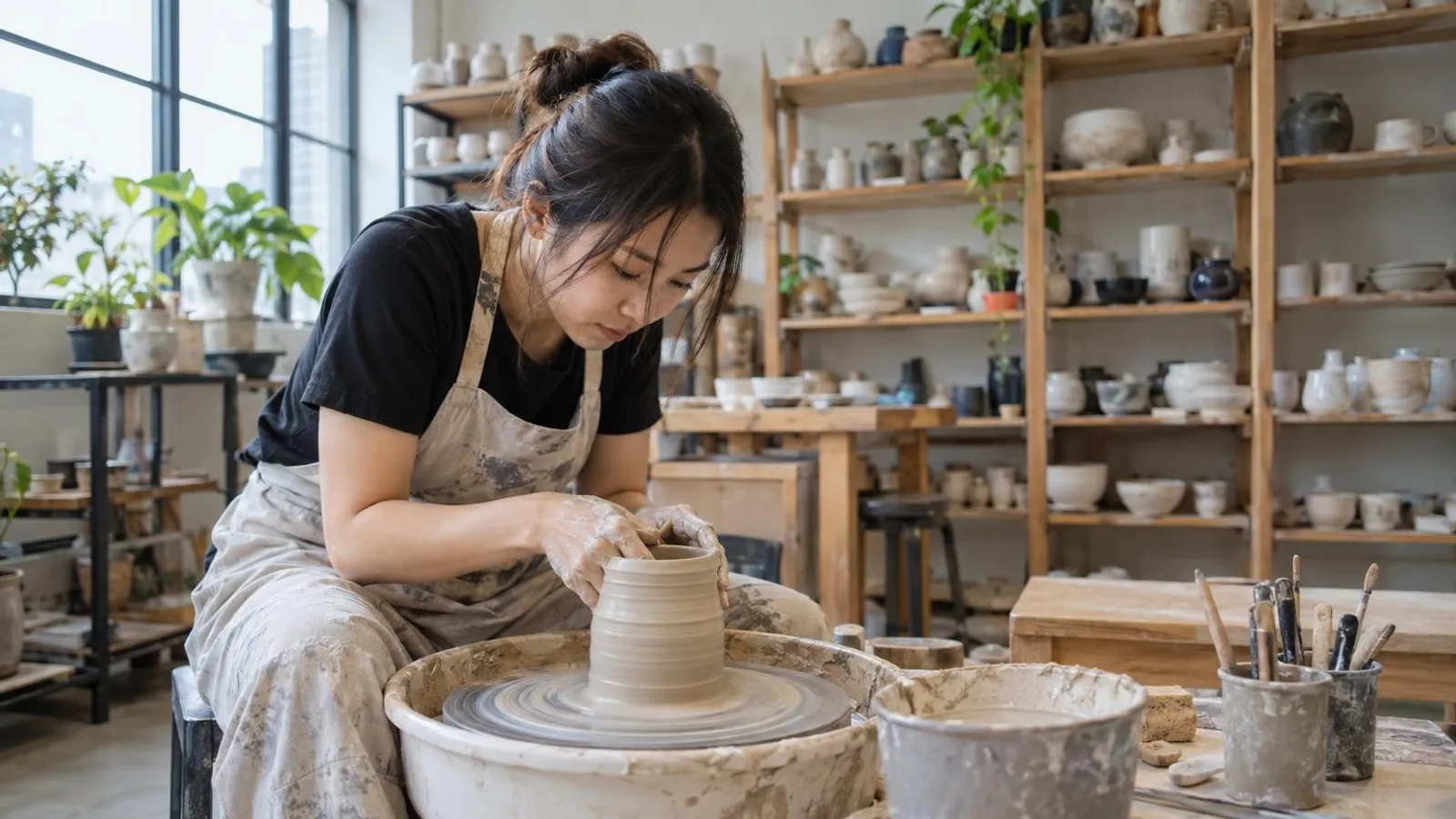 AI image by LocalRank
Taking up pottery in Singapore has never been easier, with dedicated ceramics studios spanning wheel throwing, hand-building, one-off taster sessions and multi-week courses. This guide gathers ten established pottery studios, from a heritage wood-fired dragon kiln in the west to intimate beginner spaces and large city studios with in-house kilns. Each was checked against its own website, so treat it as a shortlist to compare on technique, format and location rather than a strict ranking.
1. Mud Rock Ceramics
Mud Rock Ceramics is a professional production studio and ceramics school on Outram Road, founded by two potters who have practised the craft for many years. Its teaching runs from a one-off trial through structured beginner courses covering wheel throwing, trimming, coiling, slab-building and glazing, so students meet both wheel and hand-building techniques before their pieces are kiln-fired. The studio also handmakes its own tableware and says it has undertaken commissions for institutions and international brands.
2. Thow Kwang Pottery Jungle
Thow Kwang Pottery Jungle is a long-running pottery off Lorong Tawas in the west of Singapore, built around a wood-fired dragon kiln that the Tan family says it has kept since 1965 and describes as the country's oldest surviving example. Alongside its collection of wares, it runs pottery workshops and educational tours for the public and schools, and holds periodic dragon-kiln wood-firings. It has offered ceramics workshops on site since the early 2000s, making it as much a heritage visit as a class.
Lorong Tawas (Jurong)
Visit website ↗View on map ↗
3. Am I Addicted
Am I Addicted is a Korean-run pottery studio inside Orchard Central that the studio says is Singapore's largest, occupying a single sizeable floor with dozens of wheels and its own kilns on site. Beginner-friendly sessions cover both wheel throwing and hand-building, and because firing is done in-house, pieces are glazed and fired without being sent elsewhere. Its central mall setting and capacity make it a common choice for larger groups and team bookings.
Orchard
Visit website ↗View on map ↗
4. Goodman Ceramic Studio
Goodman Ceramic Studio, which also operates as Studio GDMC, is an established ceramics studio that its own site now lists at the Excalibur Centre in Ubi. It teaches wheel throwing and hand-building across classes for adults, families and children, and is equipped with kilns for firing plus clay, glazes and materials for sale. The studio takes its name from the Goodman Arts Centre arts enclave, where it began.
5. The Potters' Guilt
The Potters' Guilt runs two studios, at Pearl's Hill Terrace near Chinatown and at the New Bahru cluster off Kim Yam Road, and pitches itself at people who want a serious grounding in the craft. Beginners can book a one-off wheel session or couple and family sessions, while multi-week Basic and Intermediate wheel courses go deeper into clay bodies, firing and glazing, and returning students can use open-studio time. Its facilitators are described as experienced art practitioners and educators.
Pearl's Hill and New Bahru
Visit website ↗View on map ↗
6. Urth & Phire Ceramic Studio
Urth & Phire is a wheel-focused ceramic studio on Playfair Road near Tai Seng, which describes itself as Singapore's premier ceramic studio. Its courses climb from a beginner trial through intermediate and advanced wheel throwing to masterclasses on larger forms such as the moon jar, and monthly or hourly open-studio passes let members keep practising. Pieces are glazed and kiln-fired, with finished work ready for collection a few weeks later.
7. Sen by Prodigal
Sen by Prodigal is a ceramics studio on MacTaggart Road in the MacPherson area that leans into unhurried, considered making. It teaches wheel throwing, from wedging and trimming to finishing and adding handles and lids, as well as hand-building through pinching, shaping and surface decoration, and offers open-studio access and paint-your-own bisqueware for those who prefer decorating to forming. Small group bookings are available, and classes are led by practising ceramicists.
MacPherson
Visit website ↗View on map ↗
8. The 8th Floor Ceramics
The 8th Floor Ceramics is an appointment-only studio in Geylang, near Aljunied, that says it was the first in Singapore to offer structured pottery courses. Its programmes progress step by step with close monitoring of each student's work, centred on wheel throwing, and members can book independent open-studio hours to practise between lessons. The studio frames itself as a calm, unhurried space to focus and create.
9. Dirty Hands Only
Dirty Hands Only is a small, intimate pottery studio built around beginner and returning learners, keeping classes to no more than six people so each student gets close guidance. It teaches both wheel throwing and hand-building, taking makers through shaping, moulding and glazing their own pieces, and frames the experience as a chance to slow down and work with your hands. Sessions are hands-on and unrushed rather than production-line.
10. Arudio
Arudio is a ceramics studio in Woodlands that says it has run since 2014 with the aim of making pottery accessible without a steep cost. It offers a trial experience, regular workshops, a self-glazing class and open-studio time, and also rents kiln and studio space to independent makers. Founded by a professionally trained ceramic artist, it positions people and community at the centre of its practice.
Woodlands
Visit website ↗View on map ↗
How to choose
- Decide what you want from a session first: a relaxed one-off taster, a structured multi-week course that builds technique, or open-studio access once you can work independently.
- Choose between wheel throwing and hand-building, or find a studio that teaches both, since the two techniques feel very different and not every studio focuses equally on each.
- Check how firing and glazing are handled and how long finished pieces take to come back, as kiln-firing usually means collecting your work a few weeks after the class.
- Consider class size and location, since smaller classes mean more individual guidance and a studio near home or work makes it easier to return for a course or open-studio time.
- Ask what a trial or single session includes, how many pieces you keep, and whether materials, tools and firing are covered before committing to a longer package.
. No changes recorded since.
Founder and Editor
Amir Wahab is the founder and editor of LocalRank, an independent Singapore rankings and local guides publication.
Read next

6 Best Self-Service Photo Studios in Singapore (2026)
Six self-service photo studios and photobooths in Singapore, from mall photo strips to colour and black-and-white self-shoot rooms; see what each says.
By Amir Wahab5 min read

7 Best Murder Mystery Games and Experiences in Singapore (2026)
Looking for murder mystery games in Singapore? Seven hosts, dinners, theatre-style shows and mystery trails to book for parties, dates or team events.
By Amir Wahab5 min read
5 Best Freediving Courses in Singapore (2026)
Compare 5 freediving schools in Singapore offering beginner pool courses, Level 1 certification and depth training across PADI, SSI, AIDA and Molchanovs.
By Amir Wahab4 min read

7 Best Indoor Golf Simulators in Singapore (2026)
Seven indoor golf simulator venues in Singapore compared: private bays, group suites and social golf bars, with what each site says and how to book a bay.
By Amir Wahab6 min read